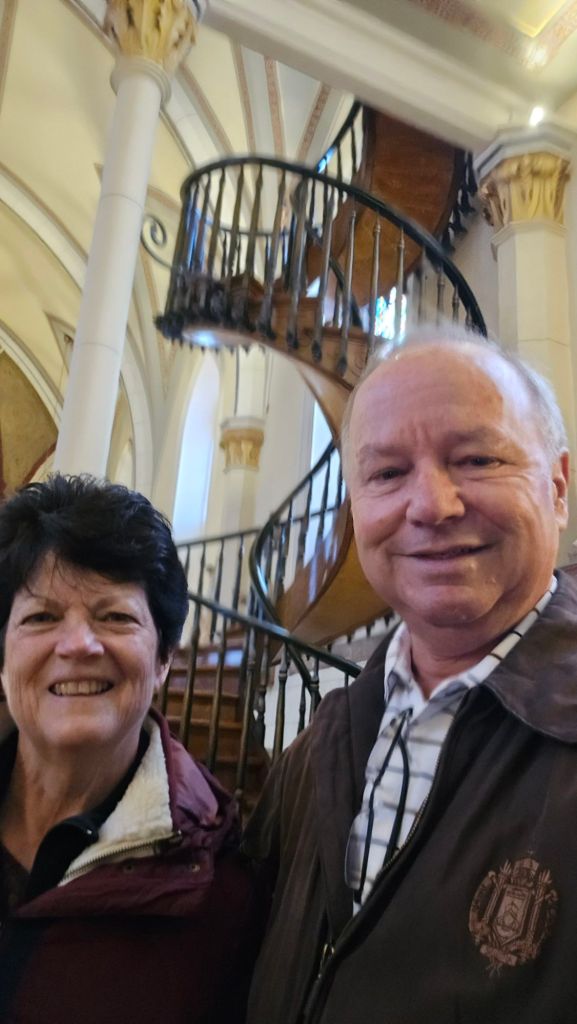
• Santa Fe is the capital of New Mexico and also the highest elevation capital in the United States, sitting at 7,199 feet above sea level. Both Mary and I noticed a distinct light-headedness on Wednesday. Not surprisingly, at that elevation it seemed to be a very quiet city. The chapel of Loretto is located in downtown Santa Fe which is also the location of old town. The chapel did not open until 9am so we decided to get there shortly after opening since we planned to drive from Santa Fe to Phoenix that day, a seven hour drive. There was no traffic in the downtown area and street parking was plentiful. At 9:30 in the morning on a Wednesday it did not appear that any of the businesses, stores, or government buildings were even open. We had no trouble finding parking near the chapel.

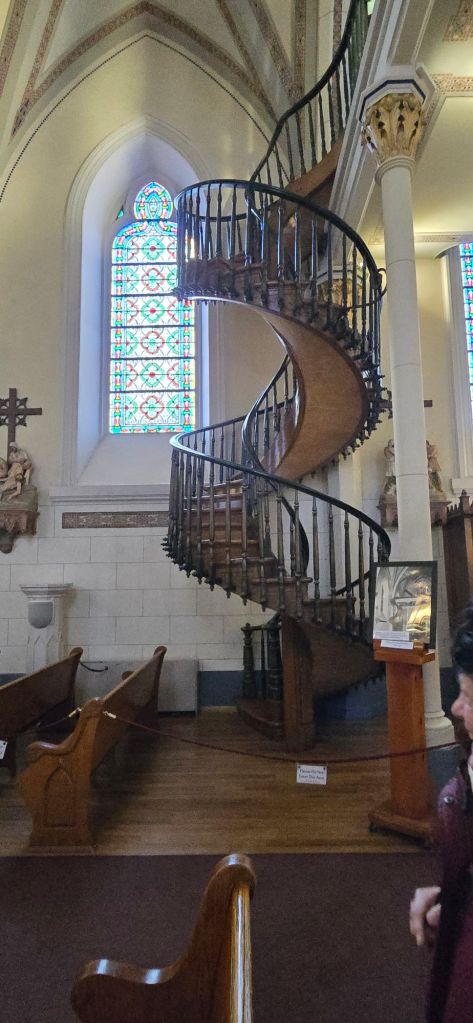
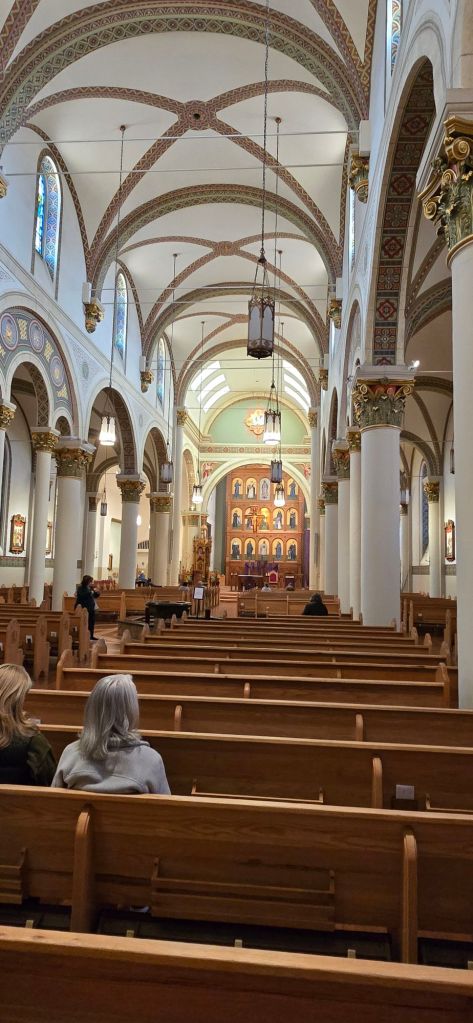
    Loretto Chapel is the first Catholic Church built in the gothic style west of the Mississippi river. In 1850 Bishop Jean Baptiste Lamy became the first bishop of the New Mexico territory and he sent out a plea to Catholic religious teaching orders to establish a school. The Sisters of Loretto agreed and sent six sisters to establish the Loretto Academy in 1853. By 1873 the sisters had the funds to build a chapel and highere the architect and builders of the nearby cathedral to have it built. As was typical for a small chapel, there were no stairs to the choir loft since most choirs when made up of men who would use ladders to access the loft. However, since the Loretto Academy was an all-girl school run by nuns the nuns desired a stairway. Unfortunately the architect died before he developed a solution and a standard staircase would have used up too much of the floor space and significantly reduced seating capacity. The nuns decided to pray a novena to Saint Joseph, patron saint of carpenters, for a solution. On the final day of the novena, a carpenter arrived at the chapel and agreed to build a staircase. Over six months he labored building the helical staircase of wood using only a hammer, saw, carpenter’s square, and water to shape the wood and without the use of nails (only wooden pegs hold it together).. Once completed, the carpenter disappeared without payment. The nuns, concerned that he may have left without paying a local hardware store for supplies inquired with all the local lumber stores only to learn that none of them had supplied materials. Furthermore it was discovered that the type of wood, a unique spruce, was not native to New Mexico and the exact source could not be determined. The spiral staircase has no center support and makes two full rotations with all the weight carried on the bottom step.
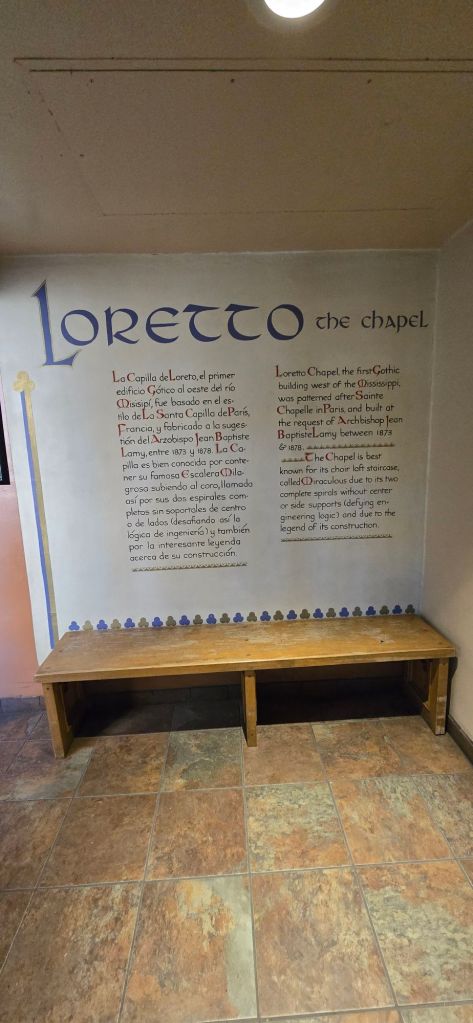
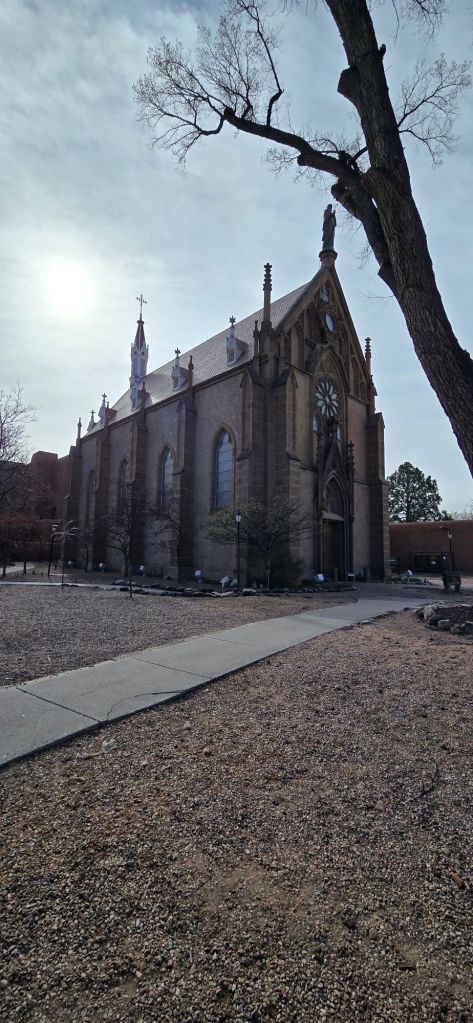
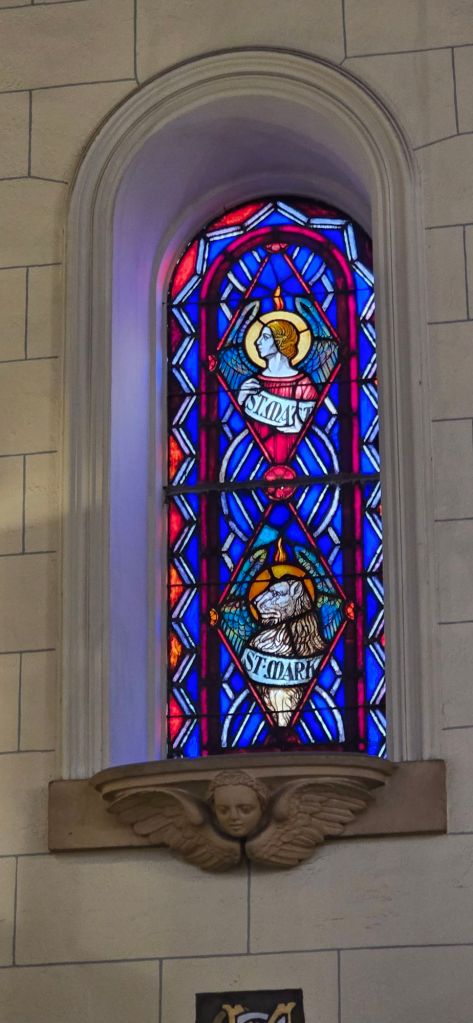
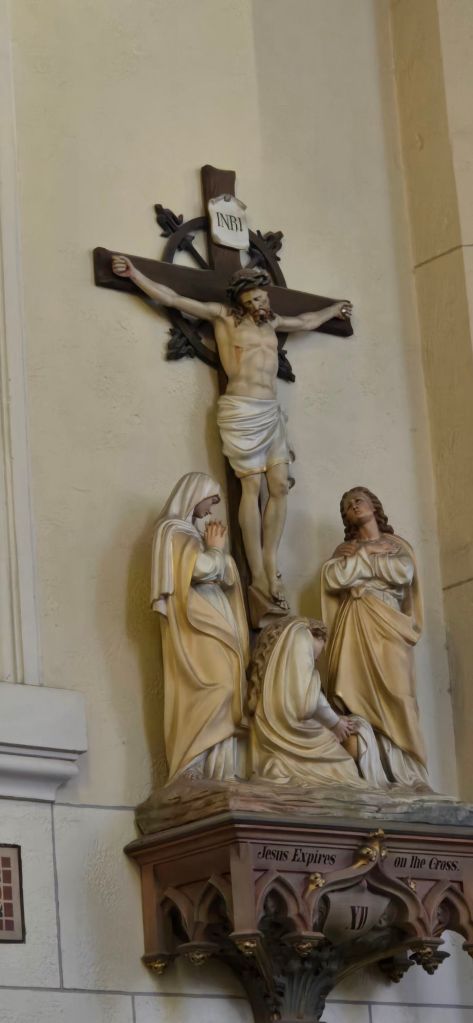
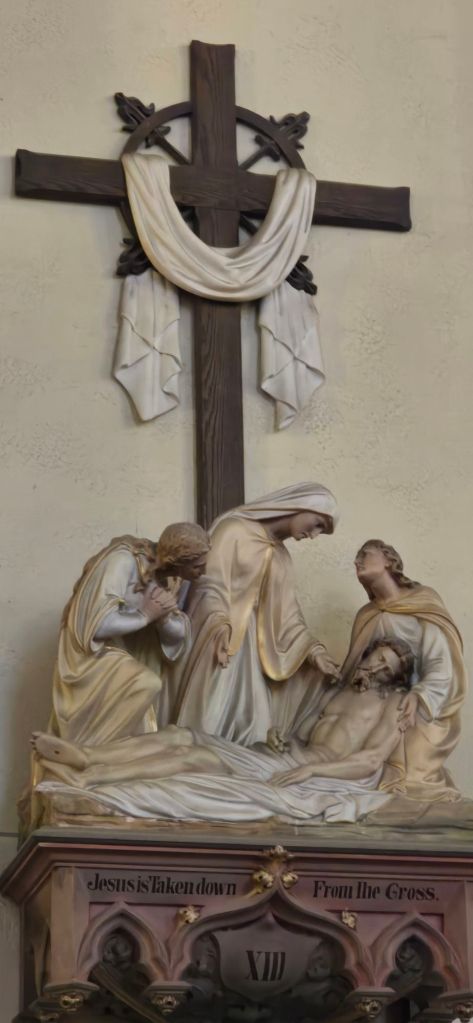
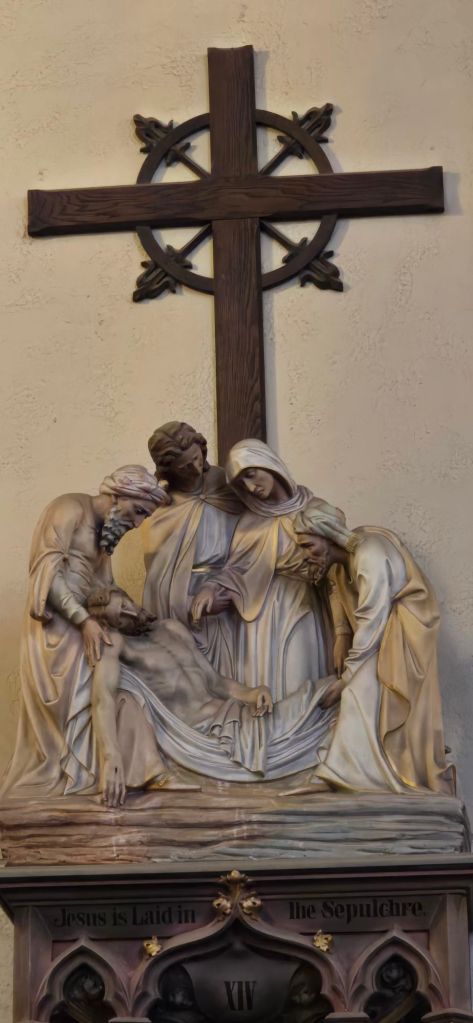
    After the school closed in 1968 the chapel ceased to be used since the cathedral was one block away. It was de-consecrated and sold to a private party that agreed it was to beautiful to be demolished but instead turned it into a museum. It is still used today for weddings and other private venues suitable to it’s former status as a chapel. The stained glass windows were made in France, the altar and stations of the cross were imported from Italy.
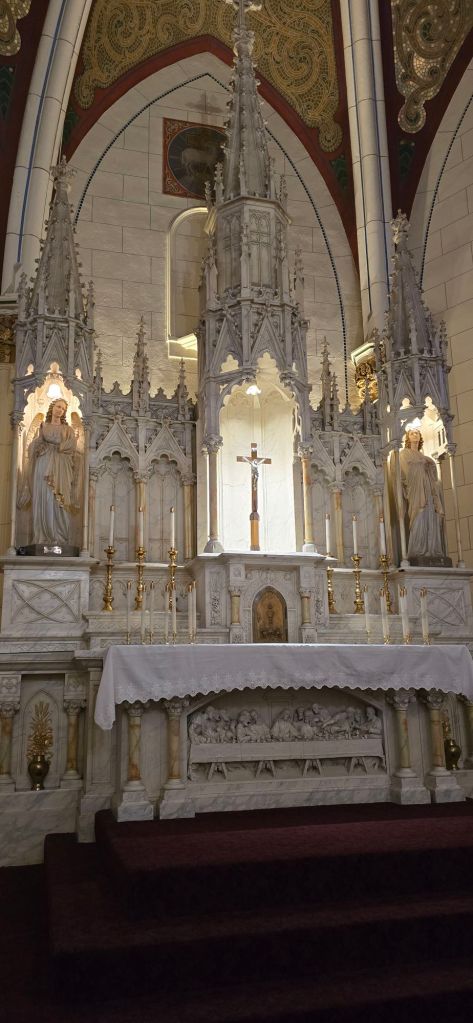
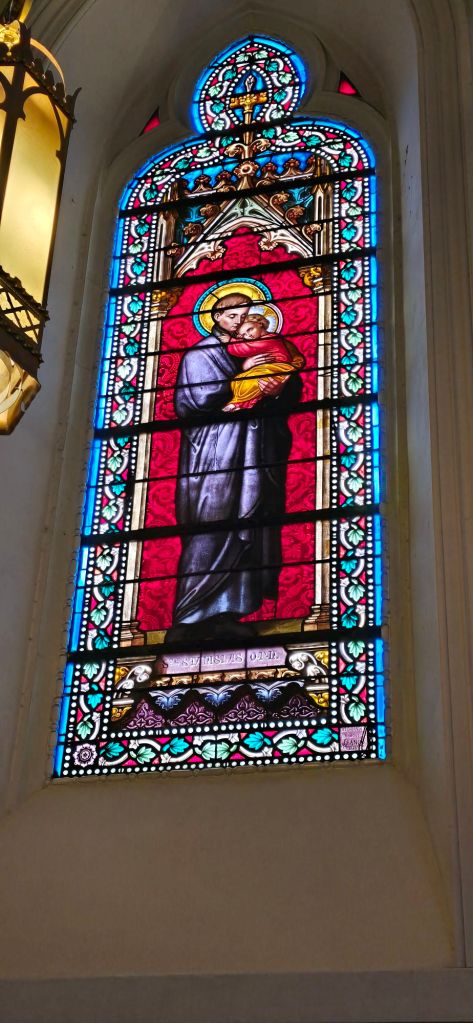
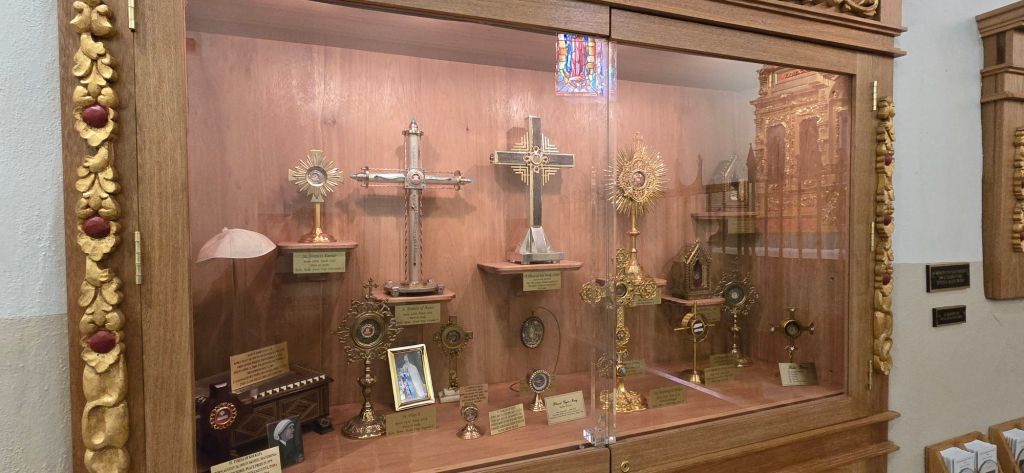
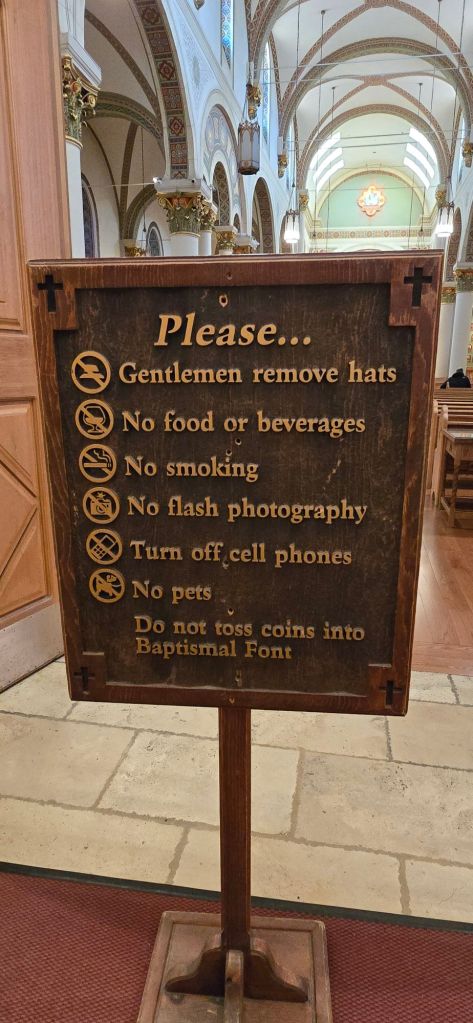
    We also visited the cathedral. I found it to be less impressive then the chapel, though beautiful in it’s own right. The notice at the entrance was humorous in it’s warning about the baptismal font. It also had an impressive reliquary with numerous relics on display.
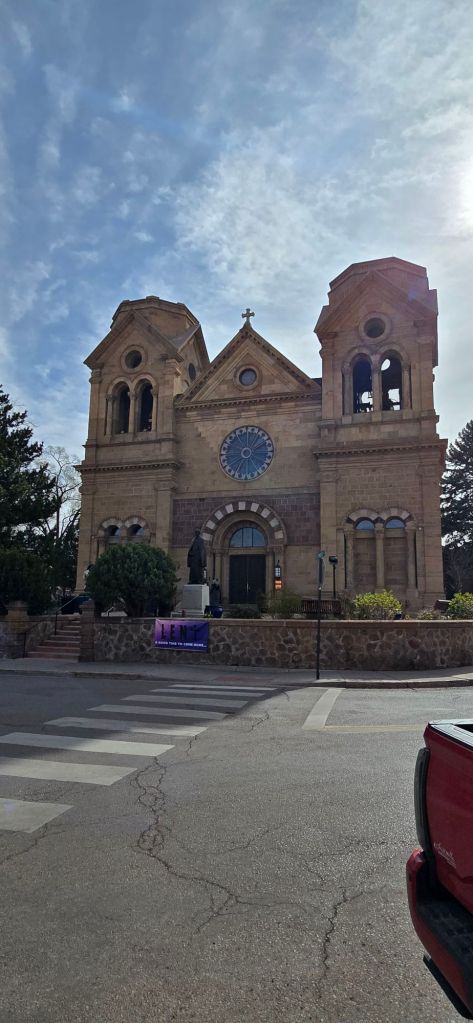
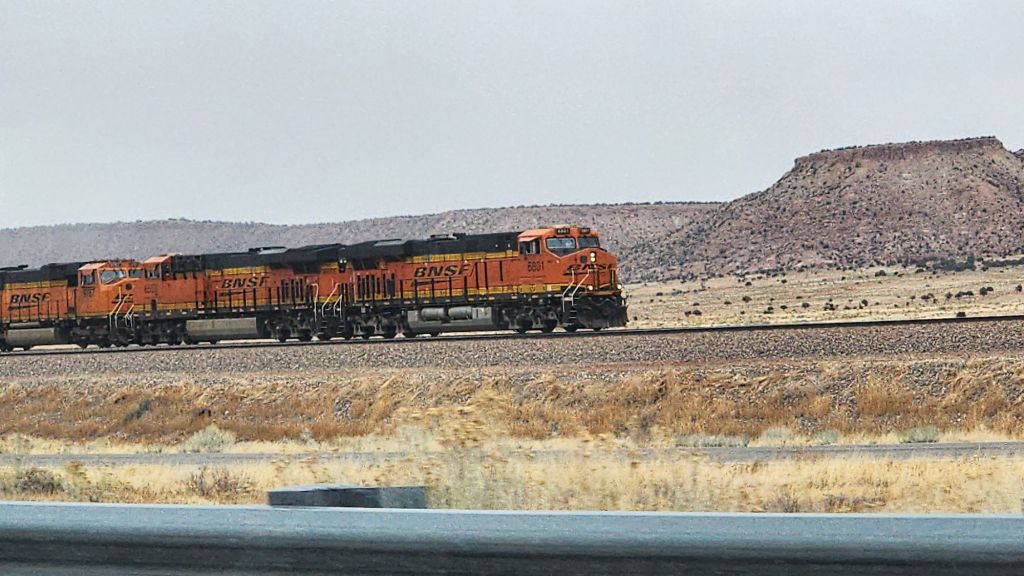
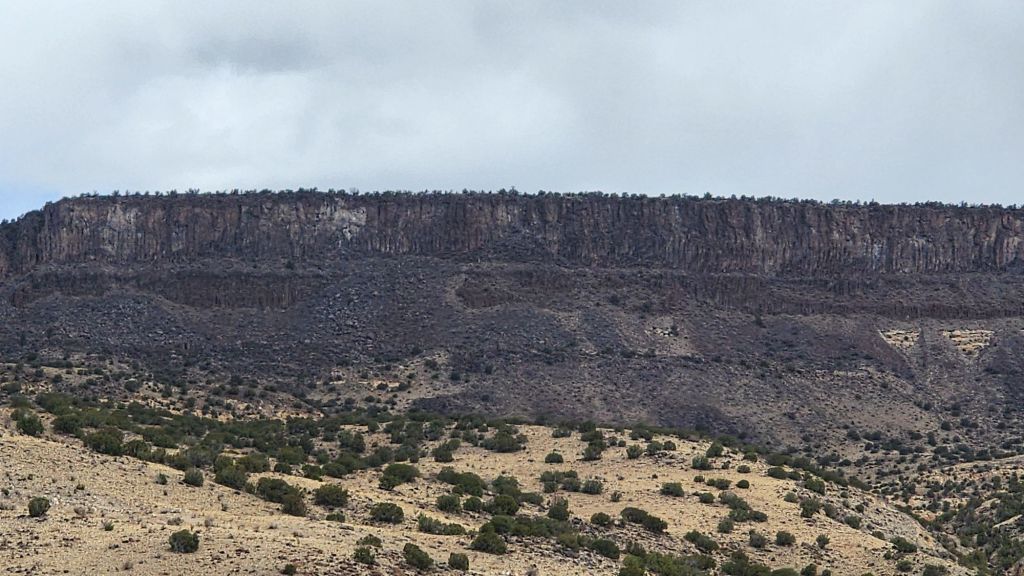
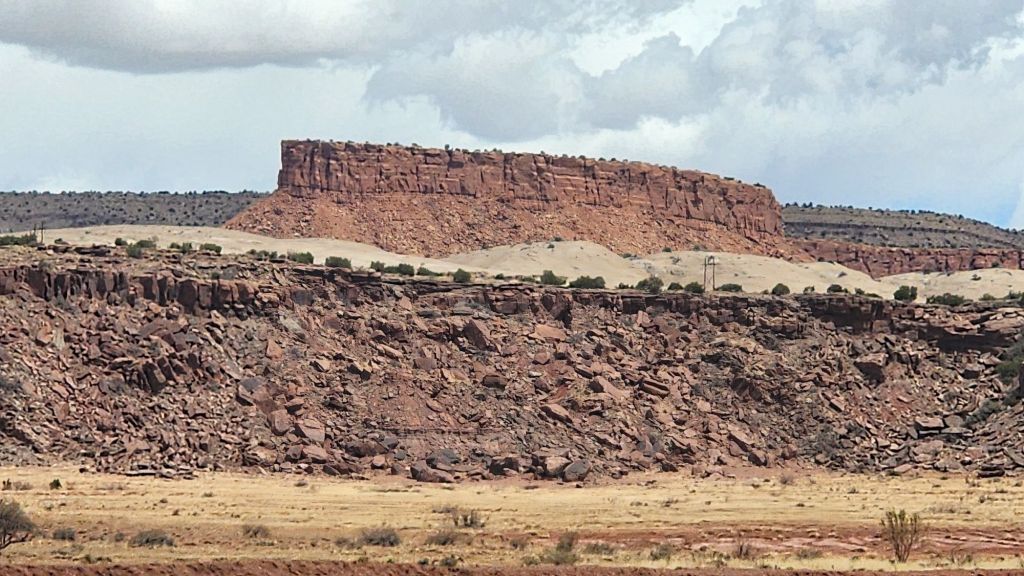
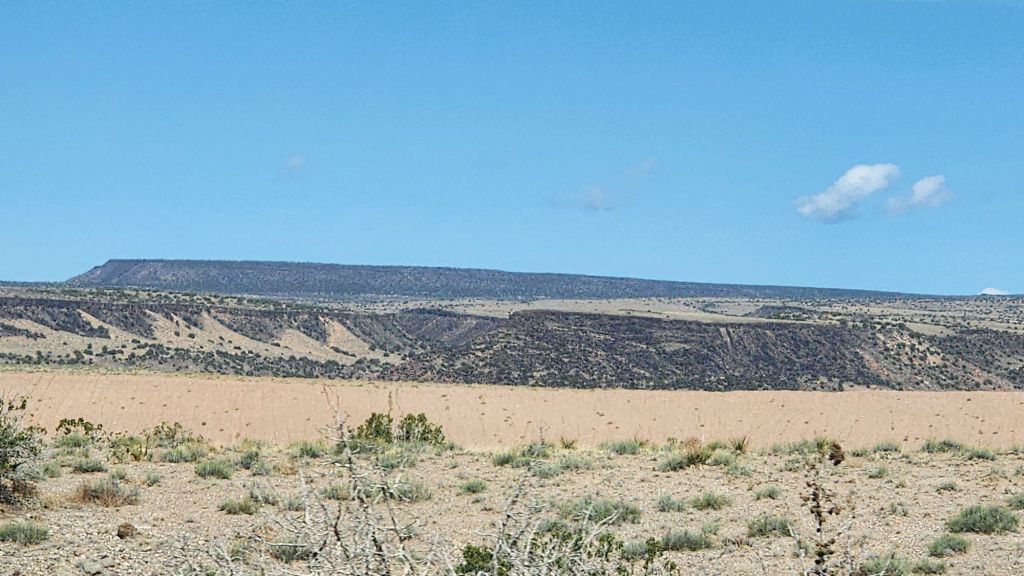
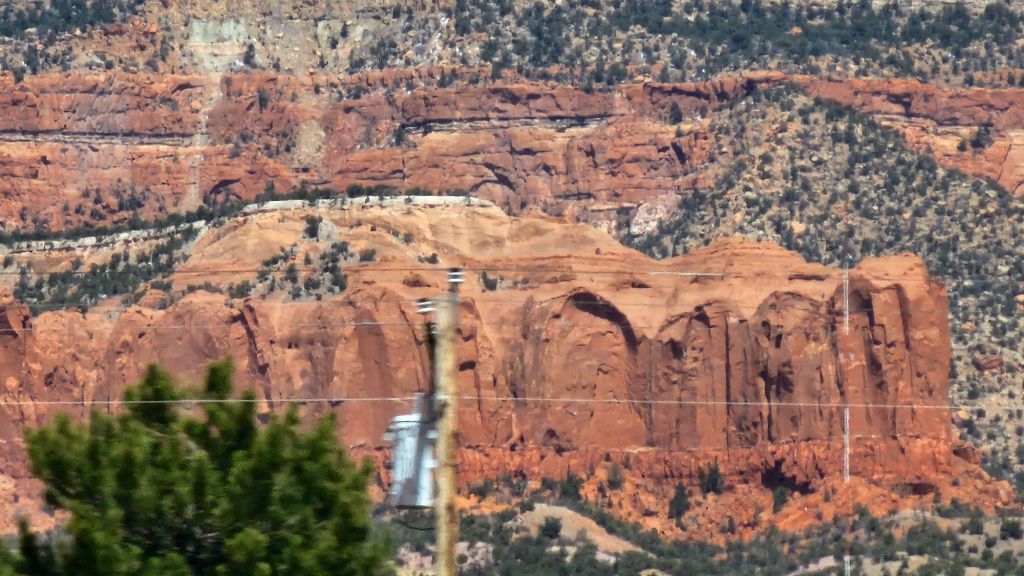
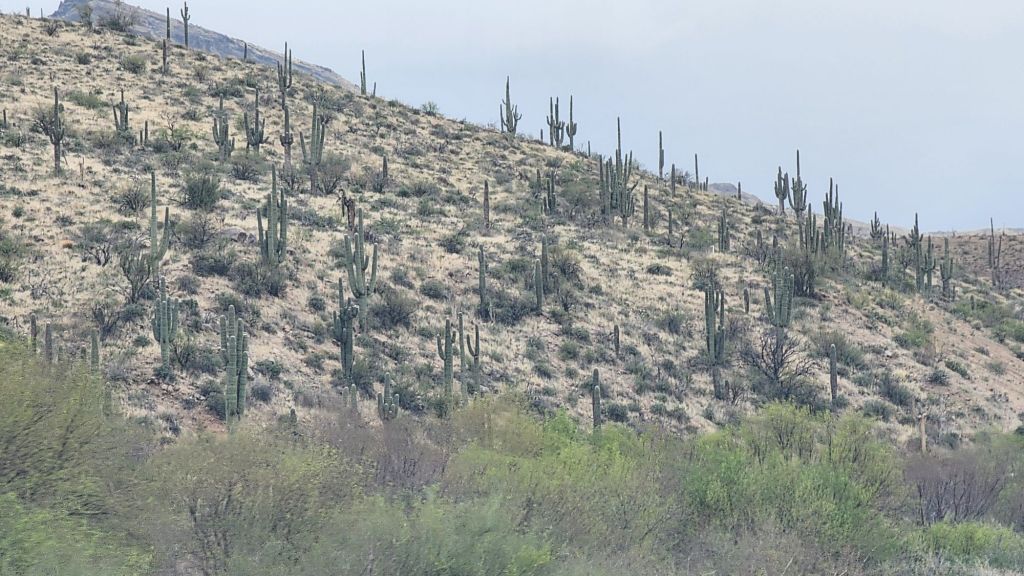
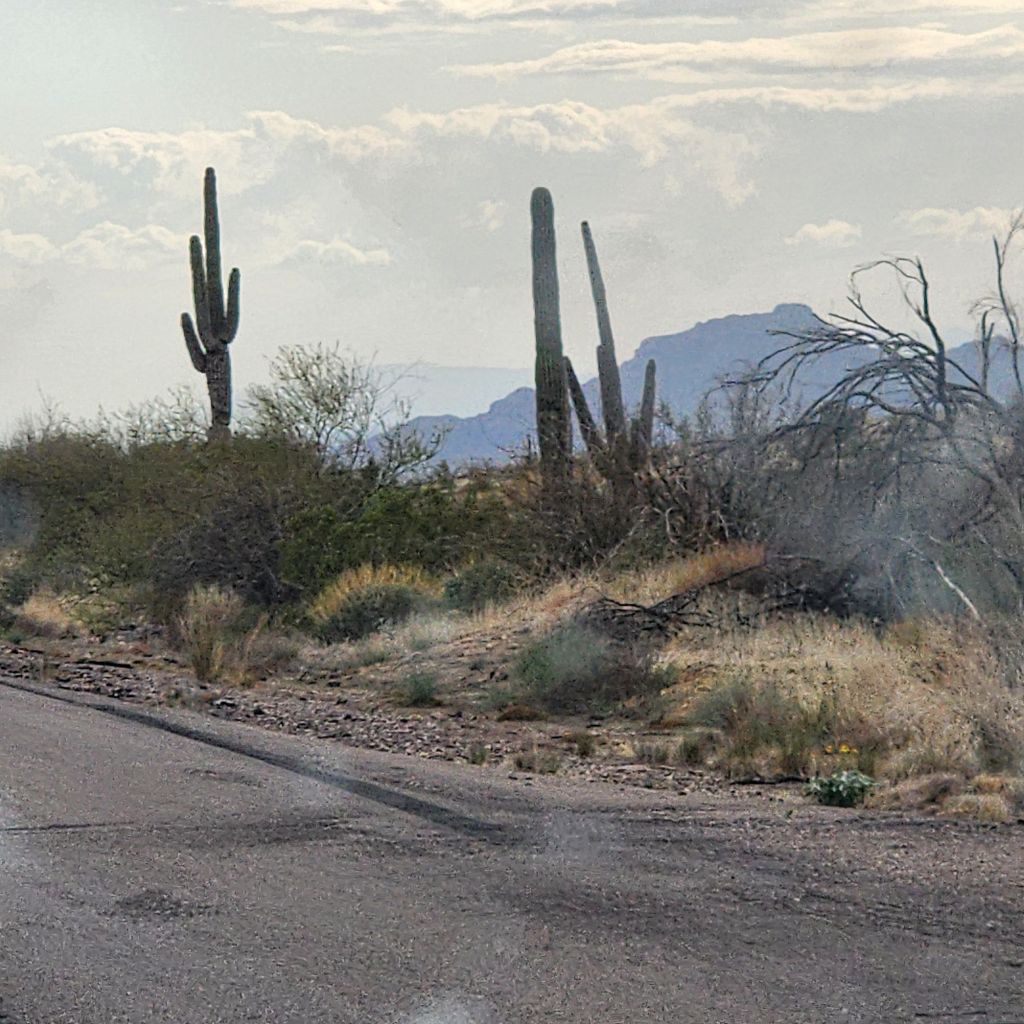
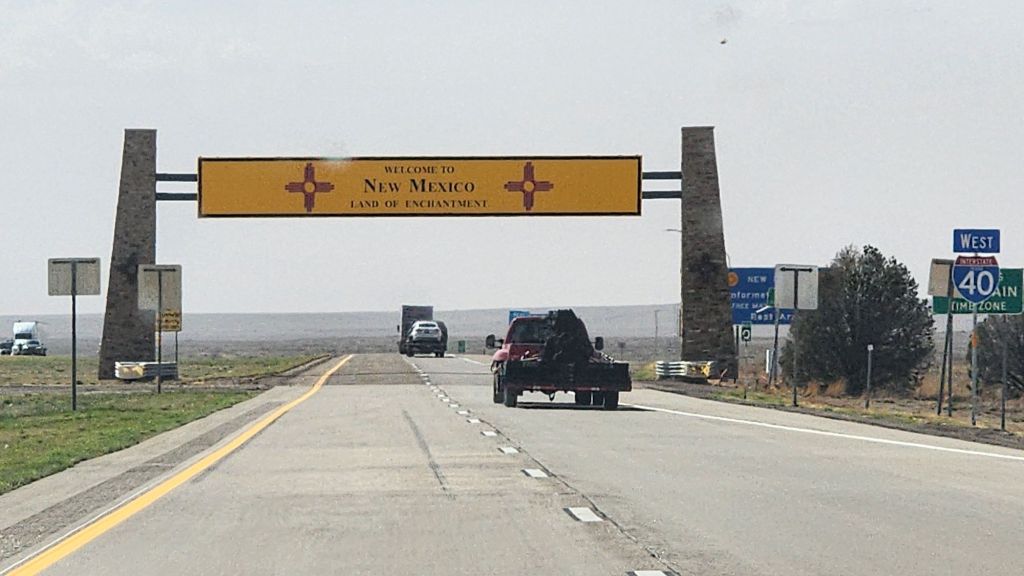
    After this visit, we drove through the mountains to Phoenix. Although it was April, the weather was quite cold and we drove through several snow showers on our way in both New Mexico and Arizona. So much for it being desert. In spite of the snow, it was a beautiful drive. We did see a huge backup on the freeway in the opposite direction that went for miles. Thankfully we were headed the other way. Several trains crossed these plains loaded with freight which contrasted with the endless line of trucks crowding the freeway which makes you wonder why the country has moved away from using trains to move freight rather than crowding the interstate with more and more trucks.
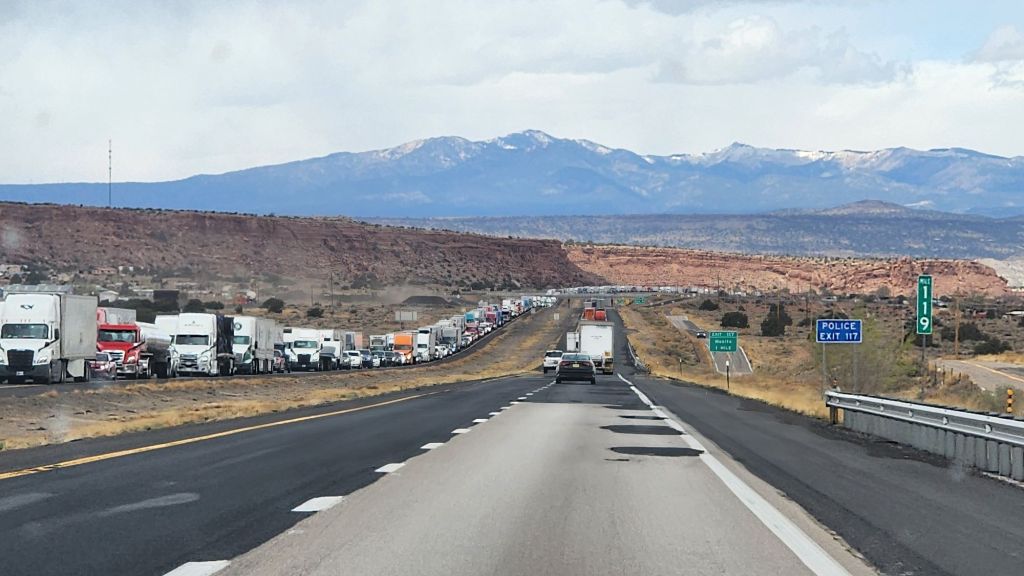
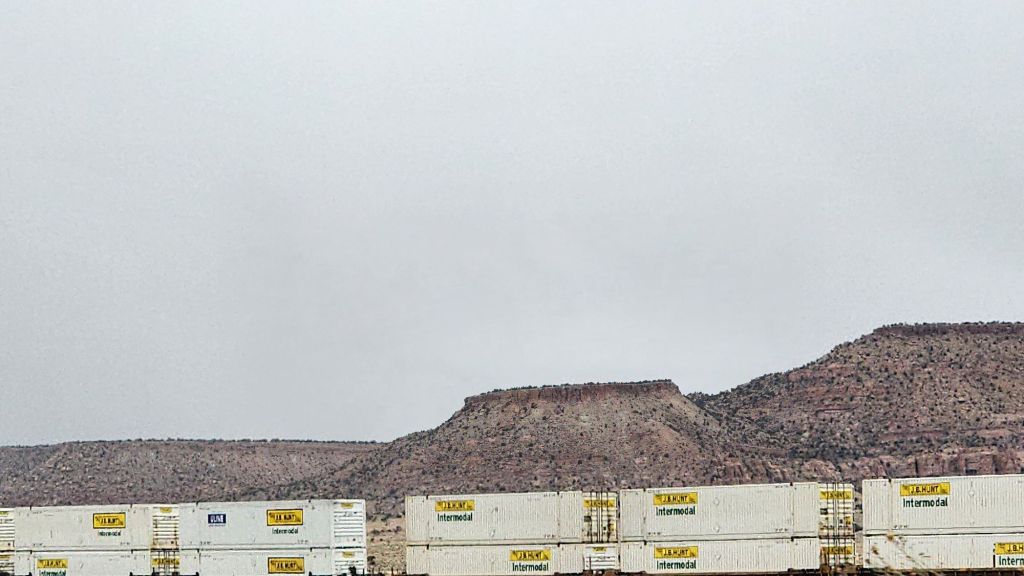
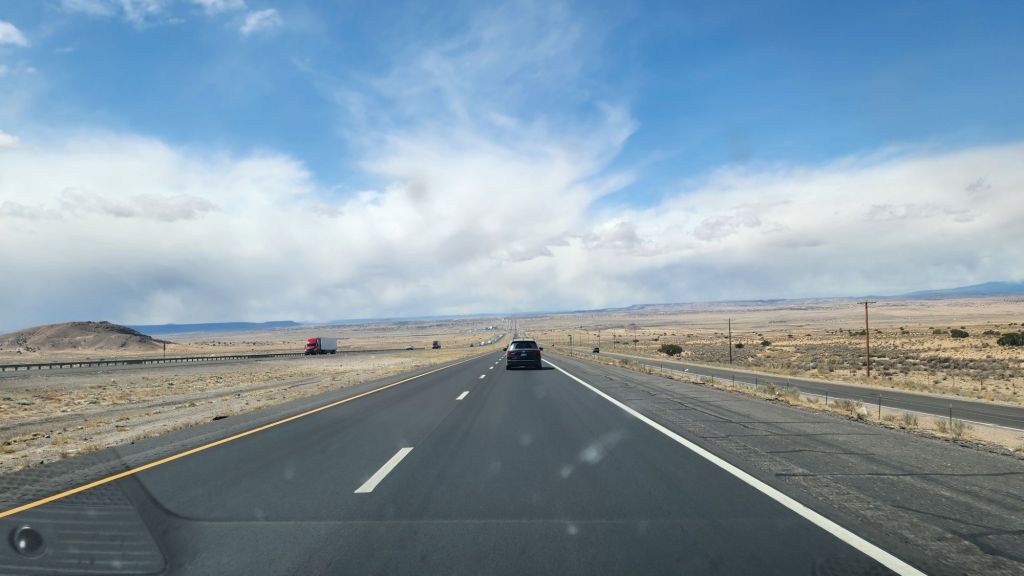
    Notable on this trip has been the changing landscape from East to West. Just on this drive alone we moved from the mountains around Santa Fe to the vast open spaces of Arizona with seemingly endless skies. This is certainly a beautiful and diverse country!
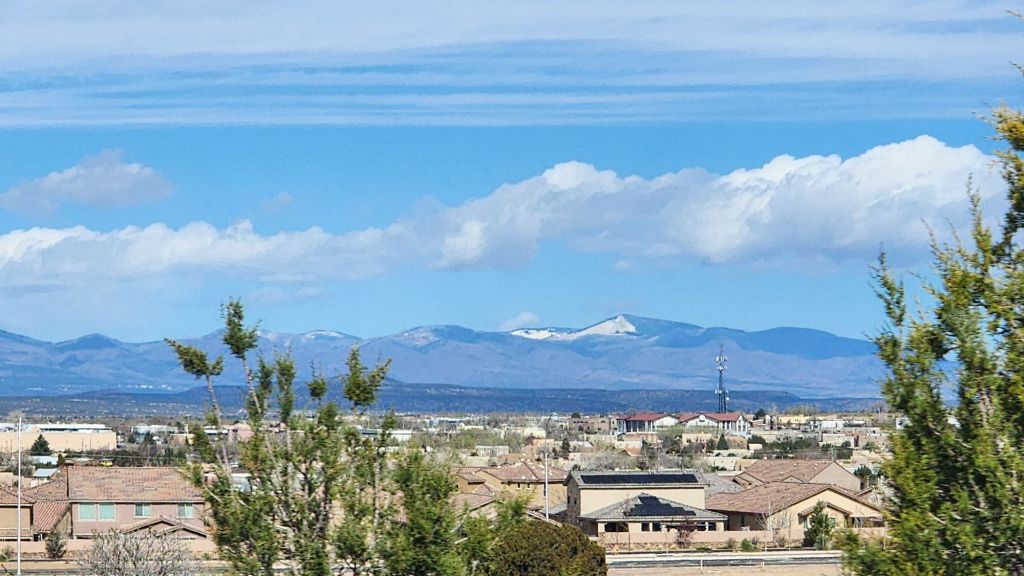
    We arrived in Phoenix with time to help our son-in-law, Richard, and daughter, Elizabeth, set up his displays in the gallery for his masters thesis photography exhibit which was scheduled to open on Friday.

  • After a morning coffee we hit the road departing Grapevine TX to continue our journey west to Santa Fe NM. We travelled across the Texas panhandle and came upon a historical site worthy of investigation. Mary found reference to the Charles and Mary Ann Goodnight Ranch House. Another interesting find.

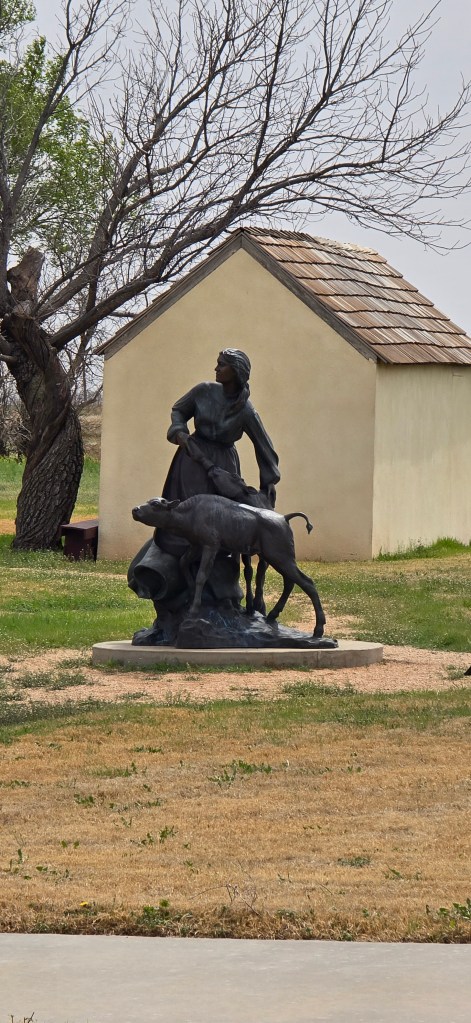
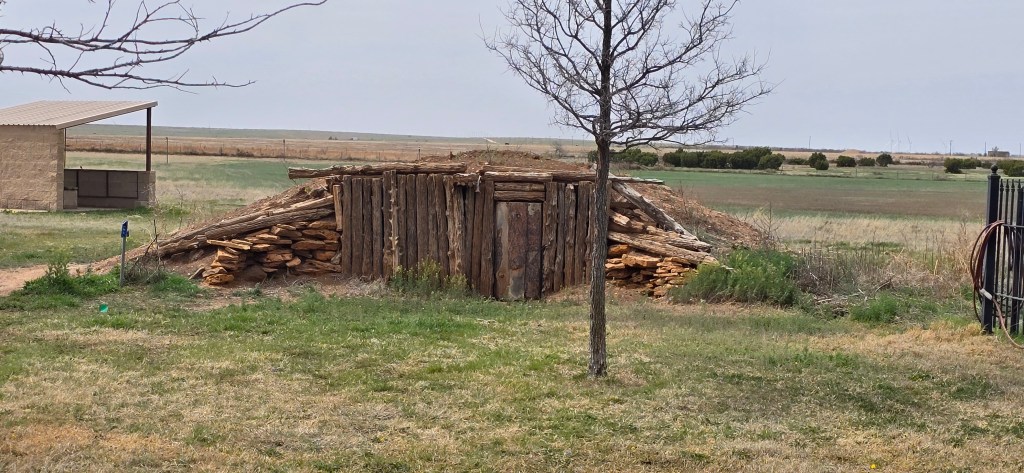
    Anyone who has read the novel, Lonesome Dove, would be familiar with the legendary rancher and cattleman, Charles Goodnight. He was one of the first ranchers in the high plains area and, with his partner, Oliver Loving, carved out the first cattle drive trail from Texas to Montana known as the Goodnight-Loving trail. In the fictional novel, Lonesome Dove, the leaders of the cattle drive, Captain Woodrow Call and Gus McRae and , are based on the real life partners Charles Goodnight and Oliver Loving. After Charles and Mary Ann established the largest range ever in Montana, they successfully operated it for decades before selling it and moving back to Texas where they established a smaller ranch and founded the town of Goodnight. This site we visited is the original Goodnight ranch house as well as a museum that highlights the significant contribution Goodnight had on settling the frontier through ranching. Mary Ann, whom Charles called Molly, took a special interest in protecting and preserving the American buffalo. There is still a remnant of the descendants of their herd on the property today.
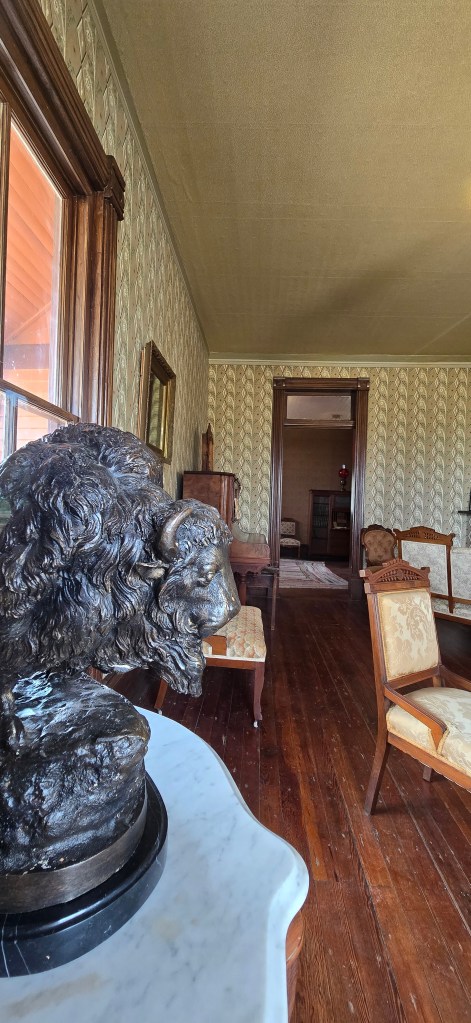
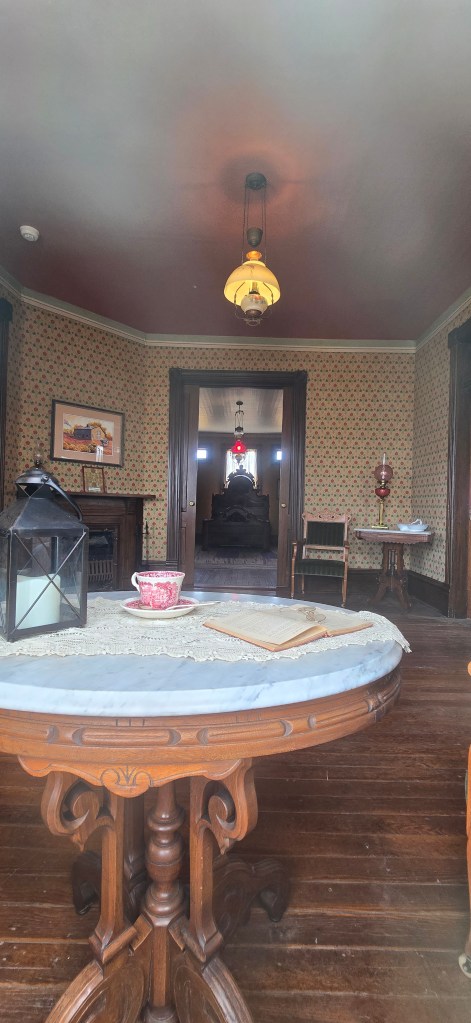
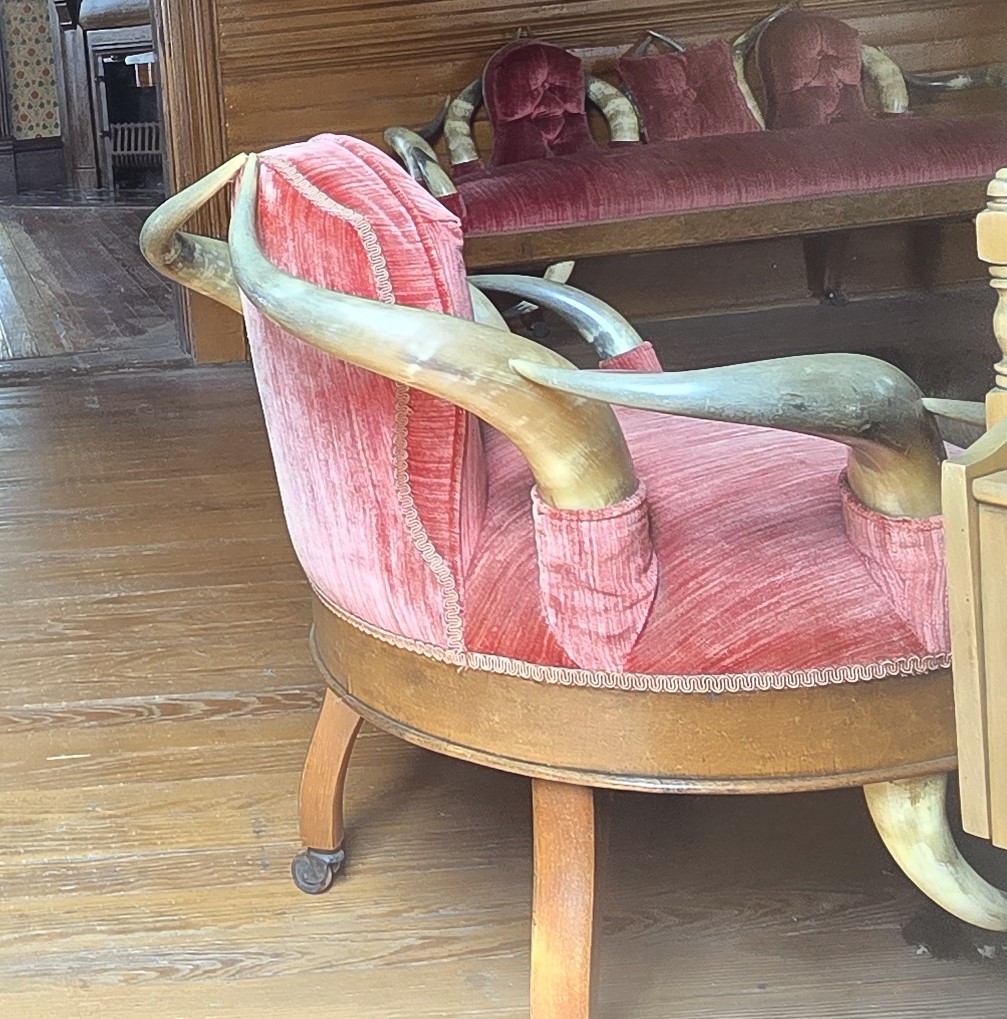
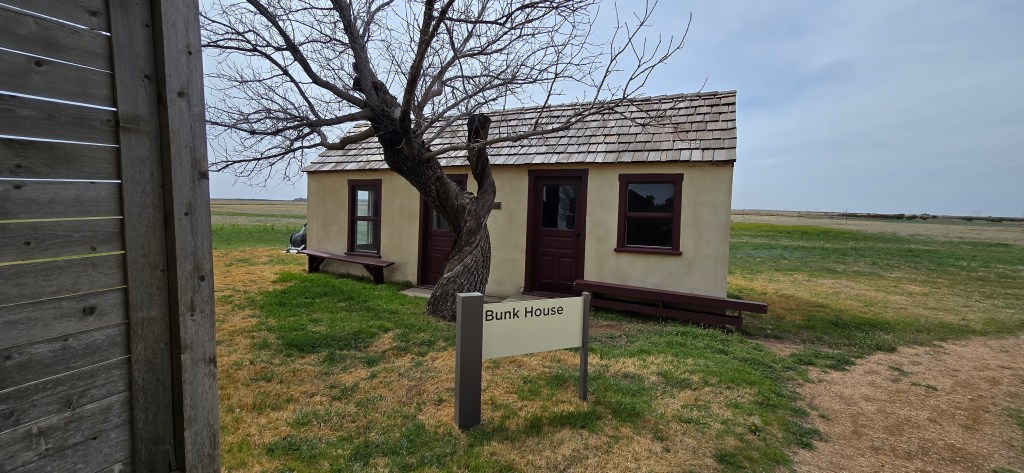
    The home had been fully restored to the 1890s and contained some unique furnishings. we were especially interested in the buffalo horn sofa and chair. There was even a windmill driven pump house, cowhand bunk house, and smokehouse in the back.

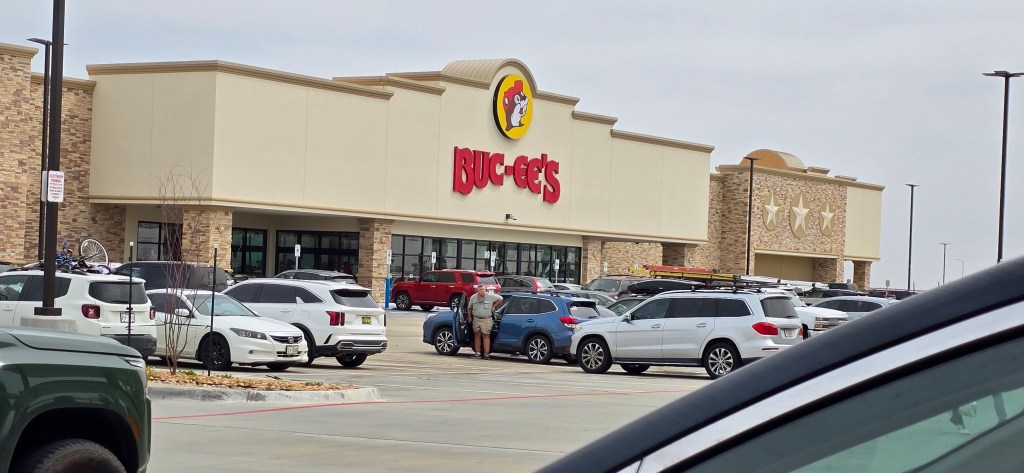
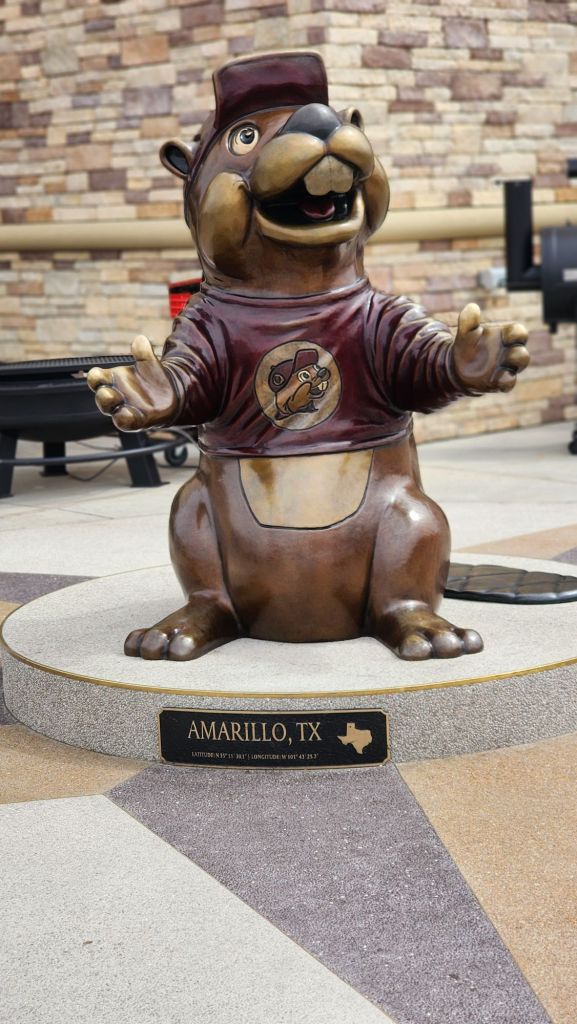
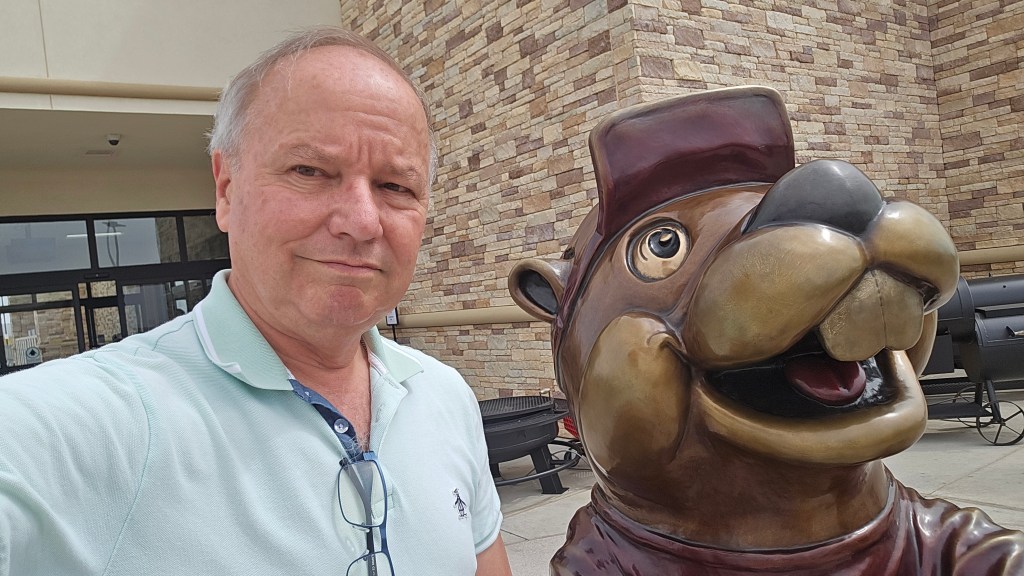
    Following our visit with the Goodnights we stopped at the one location necessary for every visitor to Texas – Buc-ee’s. I have to admit, it is a sight to see. Buc-ee’s not only had the lowest price gas in the area, it’s fresh food items smelled fabulous. We made the tactical error of having eaten before we stopped there, so unfortunately we could not sample the sweet smelling delectables they were preparing. We did pick up some Buc-ee nuggets and gummies as snacks for the trip.

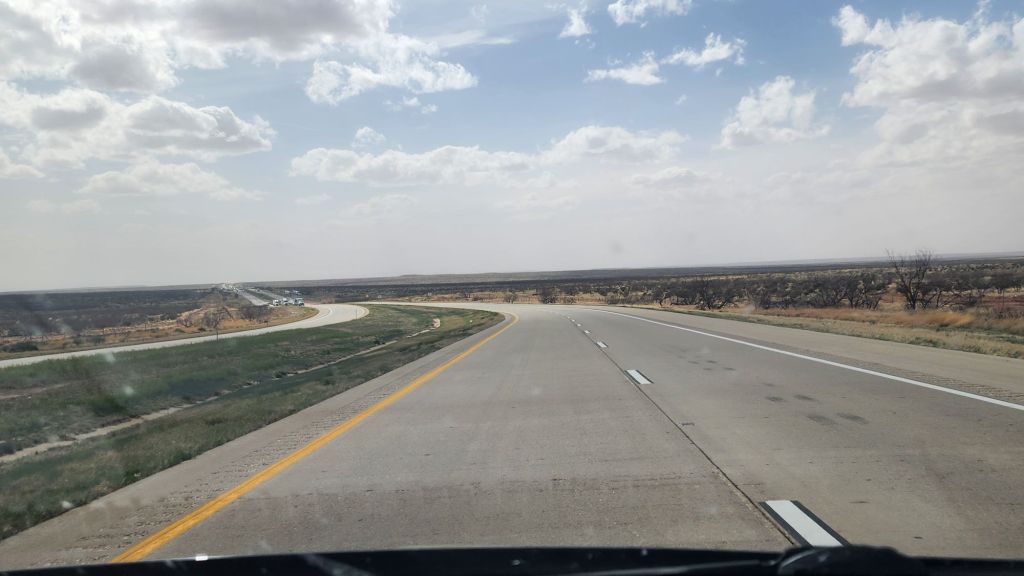
    Our drive to Santa Fe was non-eventful and west Texas is very flat with few trees. We arrived in the small capital of New Mexico just before sunset. Tomorrow we plan to visit the miraculous stairs of the Loretto chapel in downtown Santa Fe believed to have been built by Saint Joseph or an angel sent by him.

  • After all the excitement of Sunday, Monday was a very relaxed day. Being our last day in Texas, we did laundry, took another walk in Parr Park, and had a delicious dinner prepared by Chef Michele. Michele prepared a pork loin with a chimichurri sauce accompanied by Irish potatoes. It was, as expected, delicious. A fitting end to a wonderful visit in Texas.
  • Sunday was meant to be a relaxed day and so it began. We started by enjoying breakfast with Jeff, Michele and Kim along with a nice morning conversation on family and current events. Around noon Kim needed to leave for an appointment in Dallas and the rest of us were planning an walk in the park. Unfortunately, Kim had other plans for the afternoon.

    Jeff and Michele’s driveway is fraught with hazards. Their house is on a hill above the court, but rather than a straight driveway, it takes a 15 degree turn at the crest of the hill before running parallel to the house. When backing, this 15 degree jog is not visible (you just need to know it is there). Additionally, they have a 2.5 foot diameter oak tree growing on the house side of the driveway directly opposite a six foot fence. The tree trunk required a six inch cutout on the driveway, making it an extremely narrow portal into the side parking area. Although there is street parking available, the HOA does not allow overnight parking of any vehicles on the street, so all cars need to be in the driveway or garage. Finally, on the far side of the driveway is a three foot drop down to their neighbor’s driveway which is sustained by a rock wall, the top of which is ground level to Jeff’s driveway.

    Kim had difficulty backing her car down the driveway when she left and only made it halfway before suspending her car over the neighbor’s rock wall with both the front and back passenger side wheels dangling 6 inches above her driveway and the frame of Kim’s car lying solidly on the rock wall. Jeff and I came to assess the situation.

    Our first thought was if we could raise the suspended wheels to the level of the rock wall. it may be possible to build a bridge to drive the car back on to the driveway. Jeff also lacked a helpful and cooperative neighbor. After an hour of working to lift and stabilize the car, his neighbor came out and was quite concerned that we were somehow going to cause the car to roll over and damage her house. It was all we could do to avoid engaging in a heated argument. Instead, lacking the needed materials to achieve our goal, we called AAA to get the assistance of a tow truck. This took about two hours. During this time, the neighbor’s adult son brought out a folding chair to keep an eye on us and decided to draft up a release of liability agreement that he wanted Jeff to sign. THe agreement would have had Jeff agree to pay them no more than $100,000 for potential damages (jeff wisely did not sign it). They constantly told us that our plan was seriously flawed and we should “wait for the experts from AAA”.

    When the tow truck finally arrived, we explained our plan and pointed out that he could pull his truck around Kim’s car, hook up a winch chain and tow it back on the driveway. They neighbor (once again) pulled the driver aside and said they thought our plan was flawed and would result in the car rolling into their house and damaging it. The “AAA expert” calmly explained to them that he would not let that happen but that our plan was the best option. He pulled his truck up alongside Kim’s car, but unfortunately his truck was too wide to fit between the oak tree and six foot fence (which the neighbor installed after Jeff and Michele moved in). Luckily, Jeff’s son, Kevin had left his Ford F150 monster truck at their house but it lacked a tow chain. The AAA driver agreed that using one of his chains on Kevin’s truck would do the trick, and so it did.

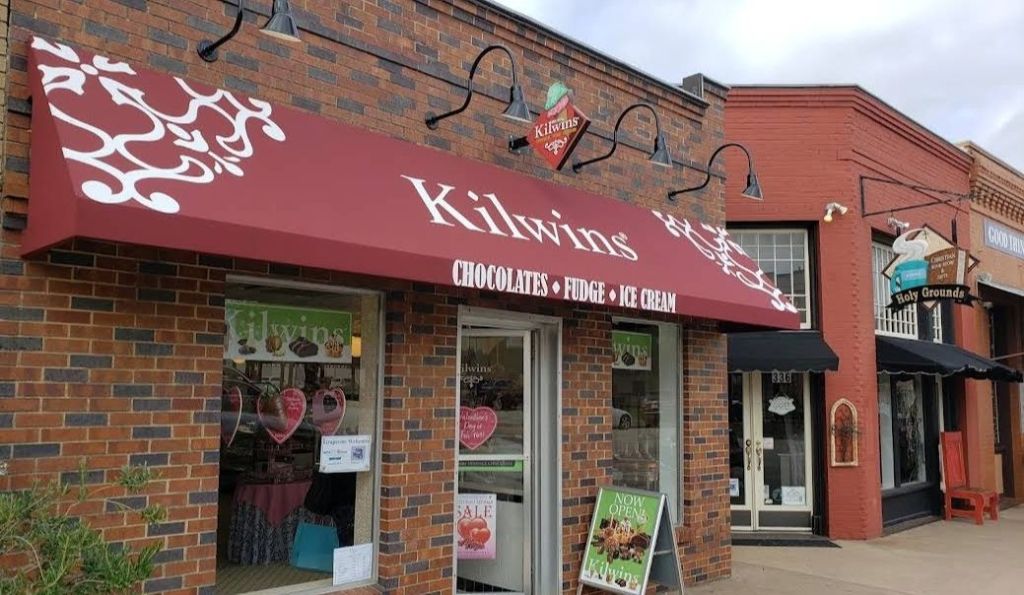
    Final result, no damage to Kim’s car or the neighbor’s rock wall. Unfortunately, we lost our opportunity for our walk in the park. Instead we went to Sunday Mass at Good Shepard Church and then joined Jeff, Michele, Rachel and Will and their children Alexander and Madeleine at an authentic Italian pizza restaurant in grapevine named Mister 01. The owner immigrated on an 01 visa which is reserved for experts in certain fields that are underrepresented or lacking in the US. Apparently, authentic Italian pizza-making falls into that category. Having now eaten there, it is very much like the pizza you get in Italy rather than the Americanized version at most pizza restaurants. Delicious. We finished the evening with Kilwin’s chocolates and ice cream.

  • After our search for departed family in Conway, we headed to Grapevine, TX (on the outskirts of Dallas/FT Worth) to visit living family members. This is the first of our lengthy stops to visit family and friends, which is the primary purpose of our trip. But more on that in a minute. We received a few inquiries regarding my great, great grandfather, Peter Paul Loetscher, and his untimely death in Conway in 1894.

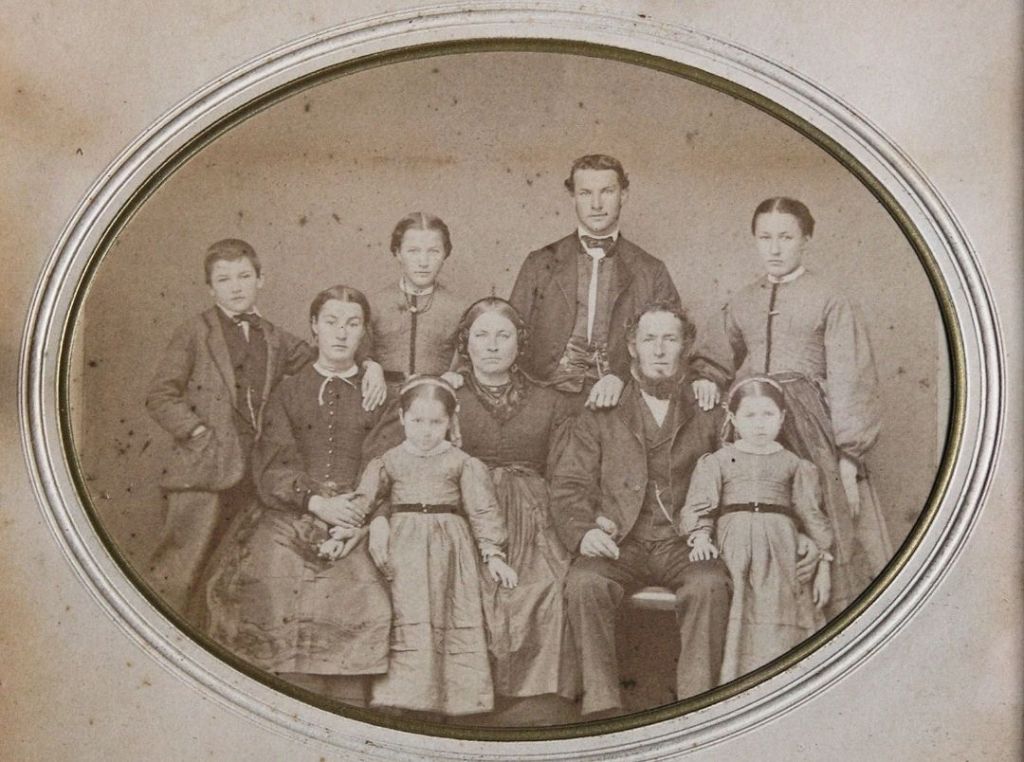
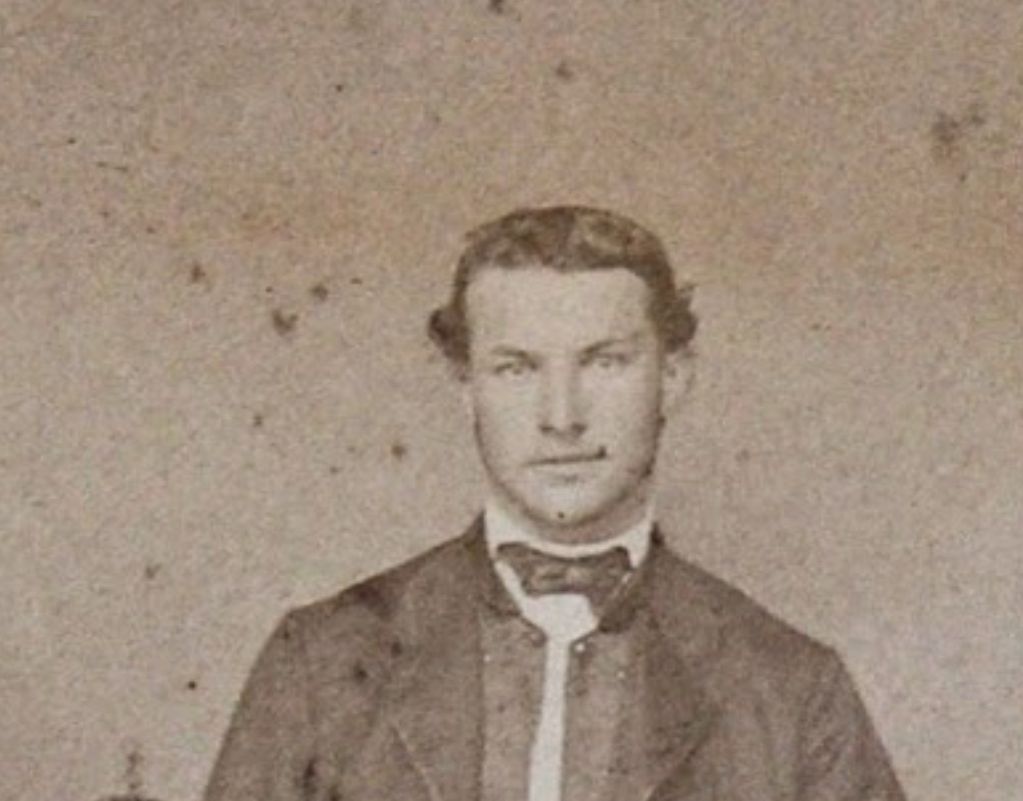
    The Loetscher family in Switzerland. Peter Paul is standing behind his parents.

    My great, great grandparents, Peter Paul and Magdalena Loetscher, immigrated from Switzerland and settled on the outskirts of what eventually became Conway, which was established on the train route 25 miles north of Little Rock, AR. The Loetschers were one of the founding families of this new city and Peter Paul was a signer of the petition to incorporate the swath of land as the new city of Conway. As well as farming, Peter Paul would also make and sell wine to feed his family. He was well known for his wine in this area and people in town would often come out to buy it. However, in 1888, under an Arkansas law that allowed cities to prohibit the sale of alcohol within 3 miles of a church or school, Conway passed such a law and the prohibition area included the Loetscher farm. This prohibition was hotly contested in court but eventually was allowed to stand by a circuit court review. As a result, the Loetschers could not feed their family without selling their wine and so continued. The mayor (a staunch prohibitionists) sent spies to watch the Loetscher farm and Peter Paul was arrested and convicted of selling his wine on a number of occasions ( becoming a repeat offender). Since feeding his family was his first priority he continued to find ways to sell his wine without selling it from the farm.

    Soon after the prohibition law was enacted, a couple of young timbermen who had been drinking whiskey and wanted more alcohol recalled the Swiss farmer on the outskirts of town that made wine so they headed to the Loetscher farm to buy some wine. Peter Paul was in the field and his wife, Magdalena, was the first to see the timbermen. When she refused to sell them wine (in fear of the mayor and his spies) one of the timbermen, Joe Luke, picked up a hoe and attacked her. Hearing his wife’s screams, Peter Paul ran to her aid with an old saber he owned. The much younger timberman attacked Peter Paul, fracturing his skull, breaking a rib and both arms and puncturing his lung. They then took several jugs of wine and left. Recognizing they needed to cover their trail, they went to the mayor and reported that the Loetscher farmer had attempted to sell them wine in violation of the law and should be arrested. The mayor was more than ready to do this and had him immediately arrested and put in jail. Two days later, Peter Paul stood in court, still suffering from his severe injuries, and immediately found guilty by the Mayor. Peter Paul died from his injuries two days later.

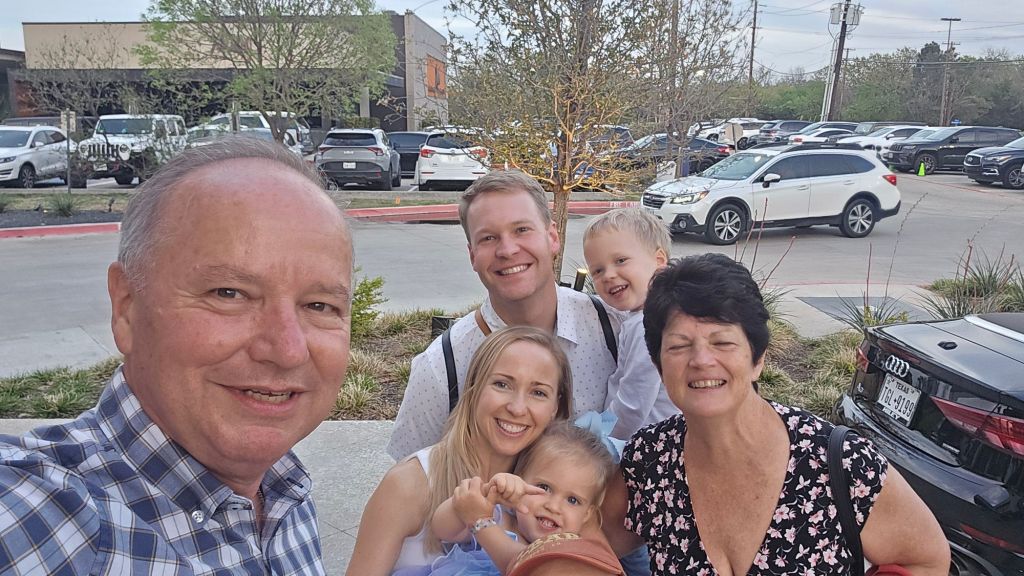
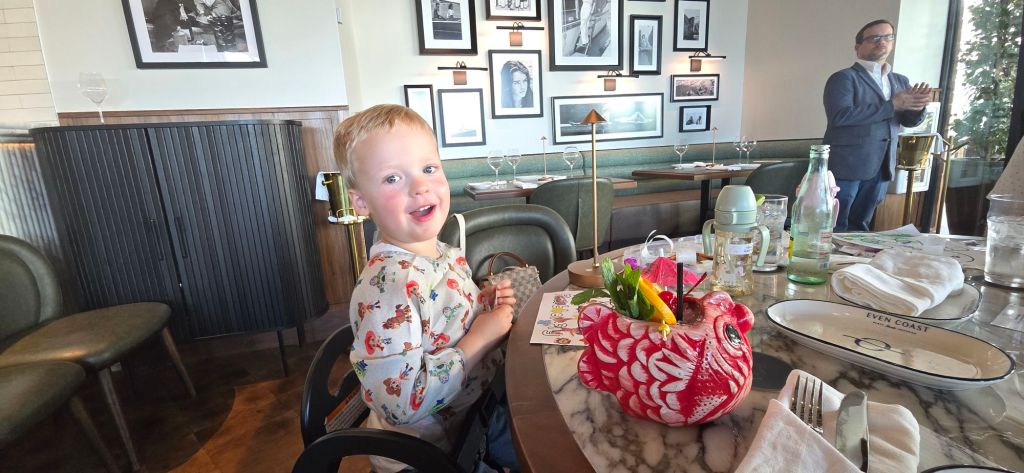
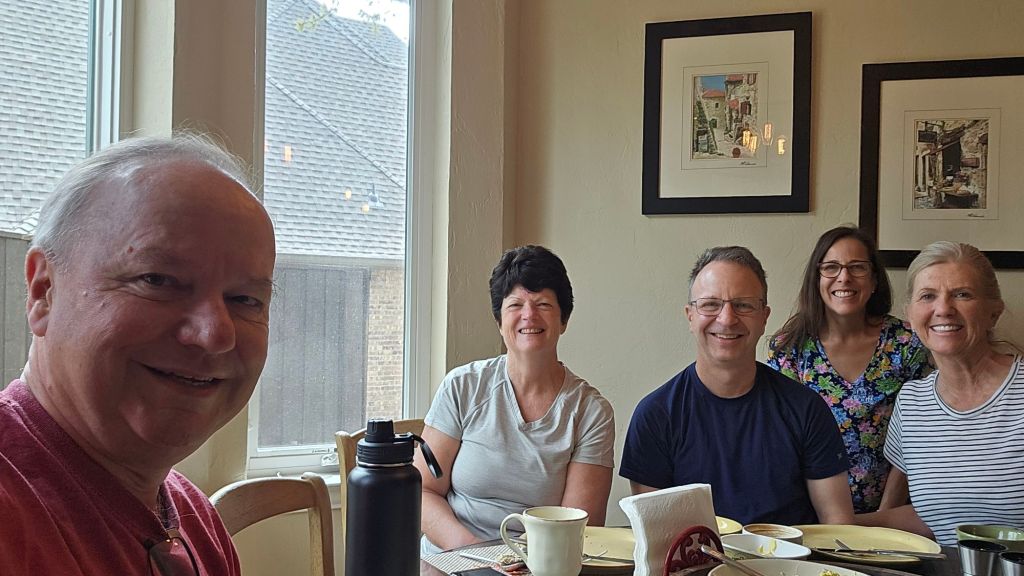
    We stayed in Grapevine TX with my brother and sister-in-law, Jeff and Michele, both excellent hosts. On Saturday we visited with my brother, Mark, in Dallas. My niece, and her family, Erin and Steven, and their children Hailey and Jack, joined us for dinner at a very nice restaurant, Even Coast. A wonderful evening of wine, food, and conversation. Jack especially liked my drink in the fish glass.

    Fish drink:

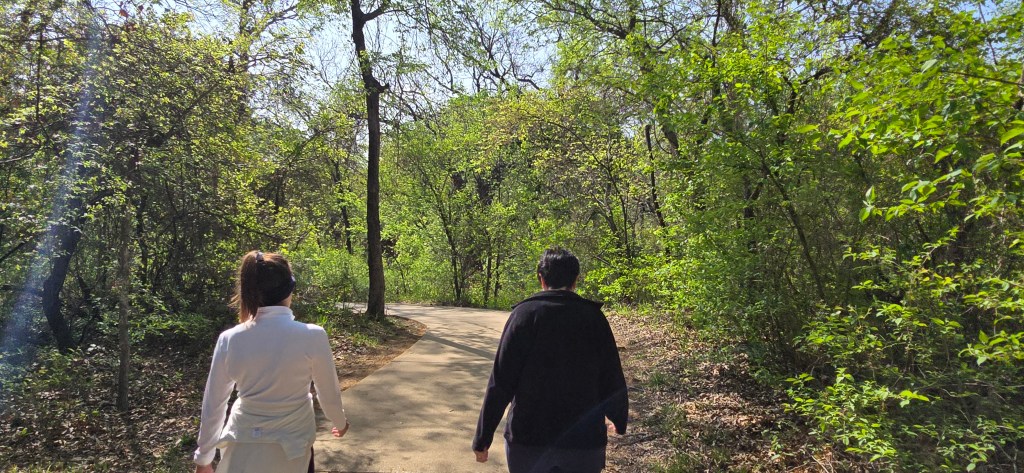
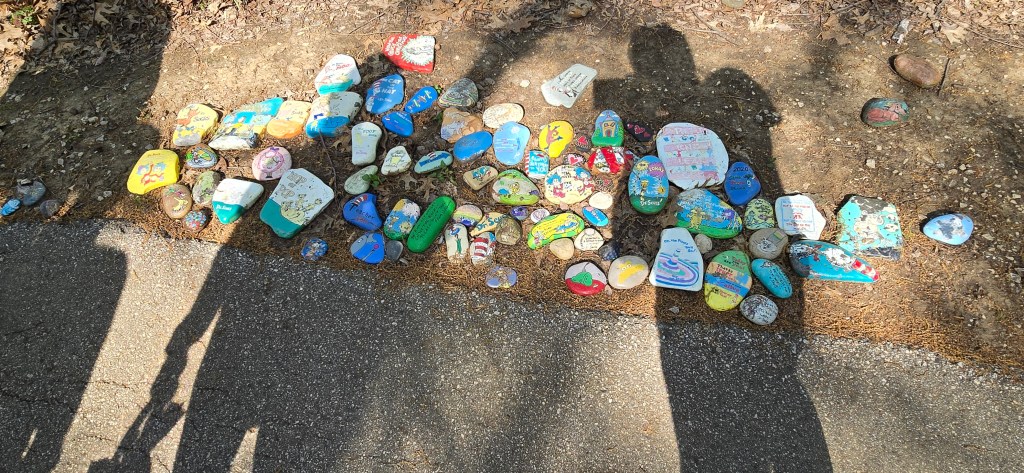
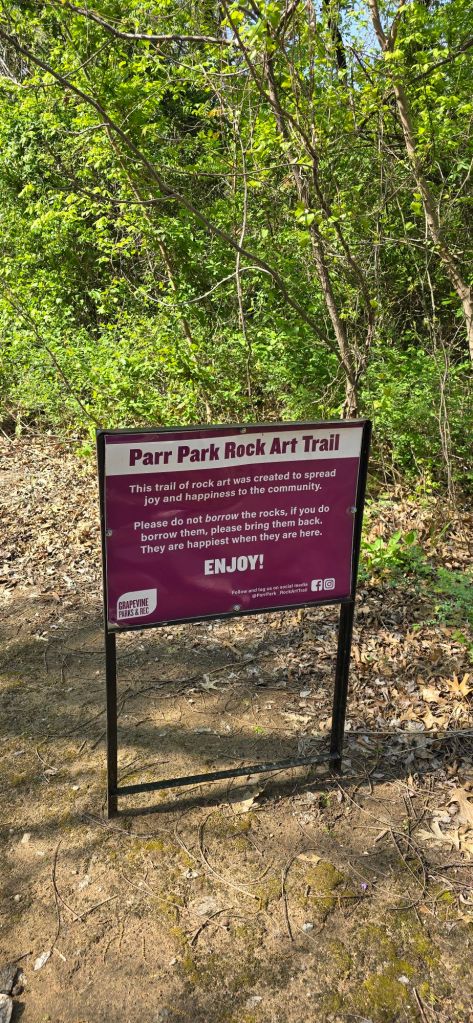
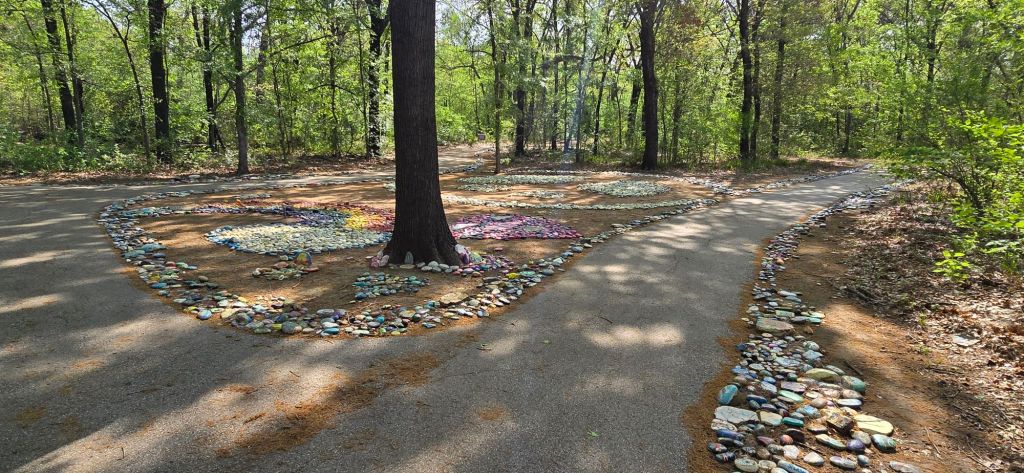
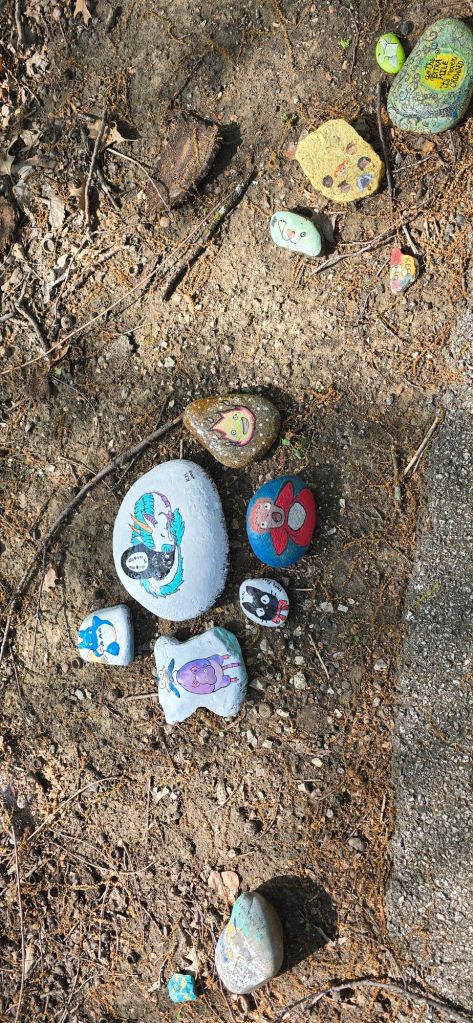
    Each day we took a vigorous walk through Parr Park near Jeff and Michele. In Parr Park there is a section lined with hundreds of painted rocks. It is the largest display of painted rocks in the world and there is a Guinness World Record plaque that identifies it as such. Aunt Kim joined us on Sunday and provided an afternoon of entertainment, but that will be in the next post.

  • Our day began with a positive development. I noticed on my phone that it was syncing with my presumably lost fitbit, meaning that said fitbit must be somewhere in our room (and not lost in Knoxville as thought). A new search through our bags discovered it in the bottom of the bag holding our keurig and coffee. Mystery solved.

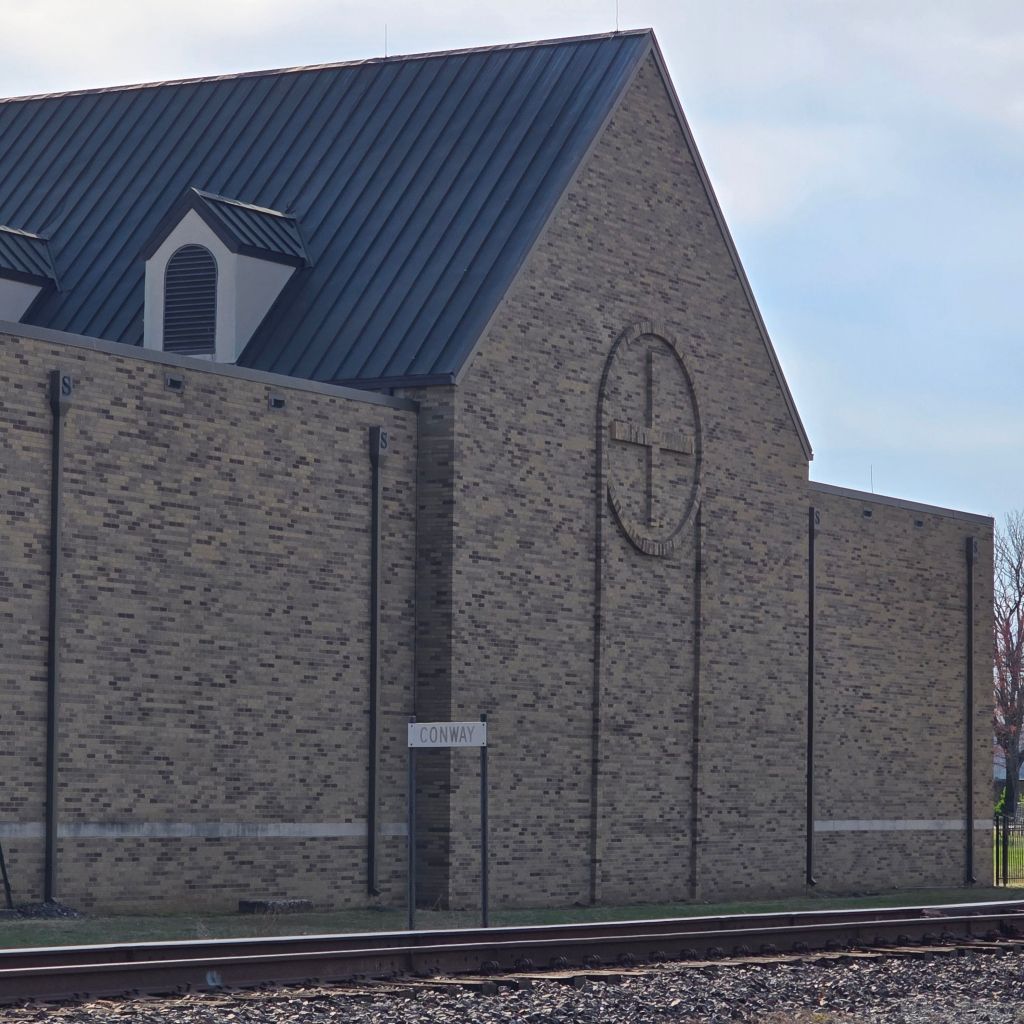
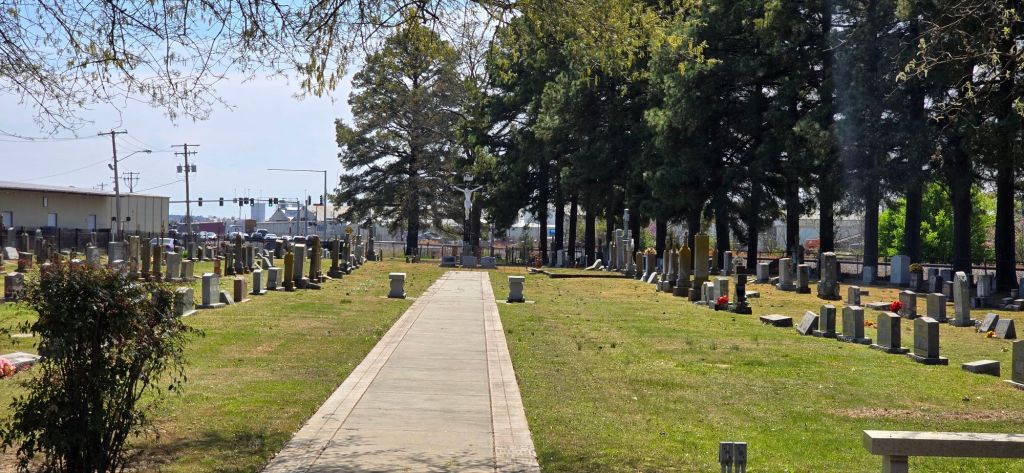
    We began at St Joseph Catholic Church for daily Mass. St Joseph Parish in Conway is actually a large campus of buildings which includes the church, cemetery, grade school, middle school, and high school all co-located. The church is beautiful and has had continuous, 24 hour Eucharistic adoration for the past 30 years. Throughout the day everyone we met, even on the street, were exceptionally friendly and went out of their way to help us. After leaving Mass we met a parishioner, Carol Hambuchen, and asked where the parish office was located, only to learn that this week the office was closed due to Spring Break. After explaining the purpose of our visit and desire to locate David Anthony’s burial site, Carol escorted us to the cemetery and made some calls to get the name of the person who manages burial plots. She then directed us to a building across the train tracks which I presume to be the parish office but in reality was an endowment office for St Joseph’s School. She said there may be someone there, if we see a car, and they might be able help. Sure enough, there was a car so we checked it out. Here we met Jacqueline. Although she was not knowledgable about the cemetery plots, she made some calls and took my number to get back to me. She did have considerable knowledge of the history of St Joseph’s and had been a life-long parishioner. She gave us a history summary and showed us pictures from the 1950s when Conway was still very rural. Unfortunately, the man she called informed us there was no listing of David Anthony in his records. There are, however, many unmarked gravesites that had recently been confirmed to hold remains but have long since lost their markers.

    We decided to check out the Faulkner County museum which advertised having mortuary records dating back to the time of David’s death. Perhaps the mortuary would have a record of the plot where David was buried.

    Although the museum hours stated it should have been open, a paper note on the door stated it was only open on Tuesday and Thursday. I checked the door which was locked, but a gentleman inside opened it and let us in. He said ti was closed because they had just lost their full time curator and only volunteers (such as himself) were available. However, he told us to look around and he would wait a while. We asked about the mortuaruy records and he said that the archivist was who we wanted to see, but she was not in. Alas, no luck.

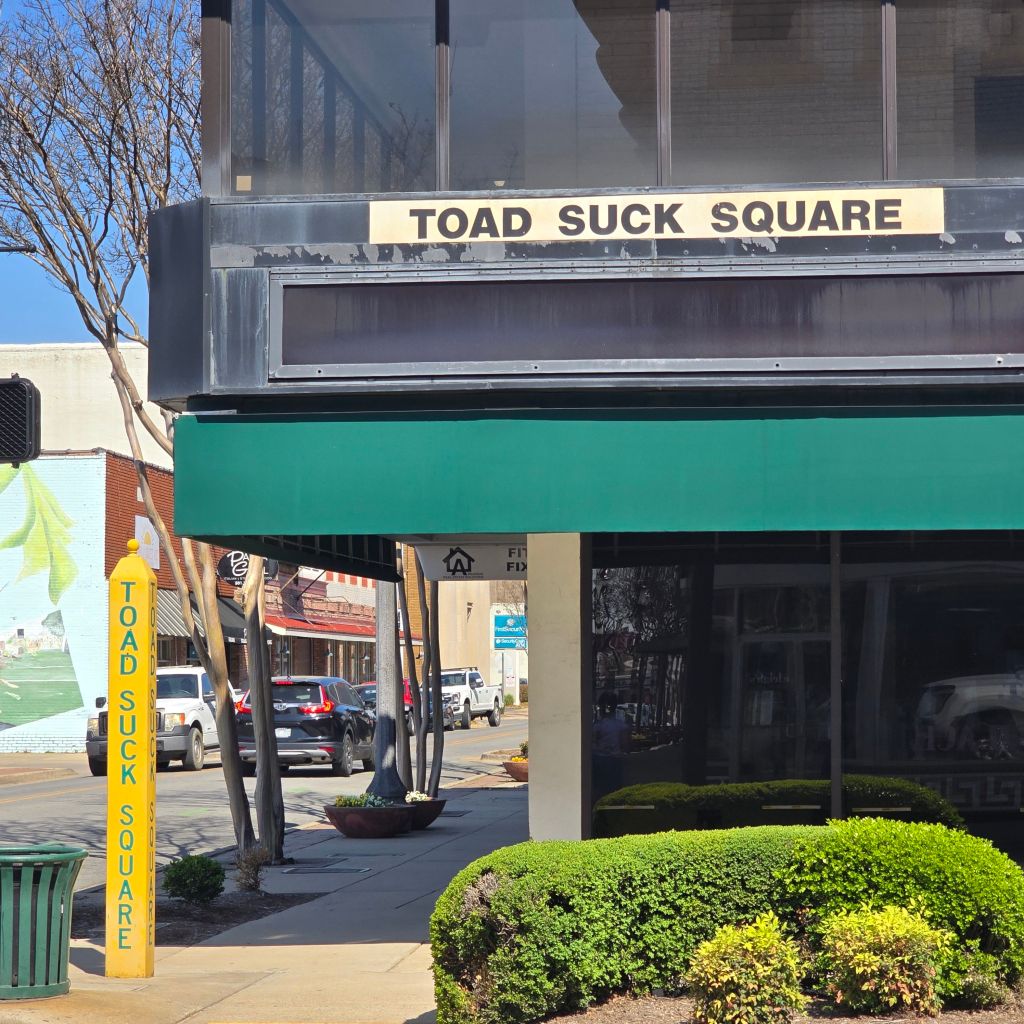
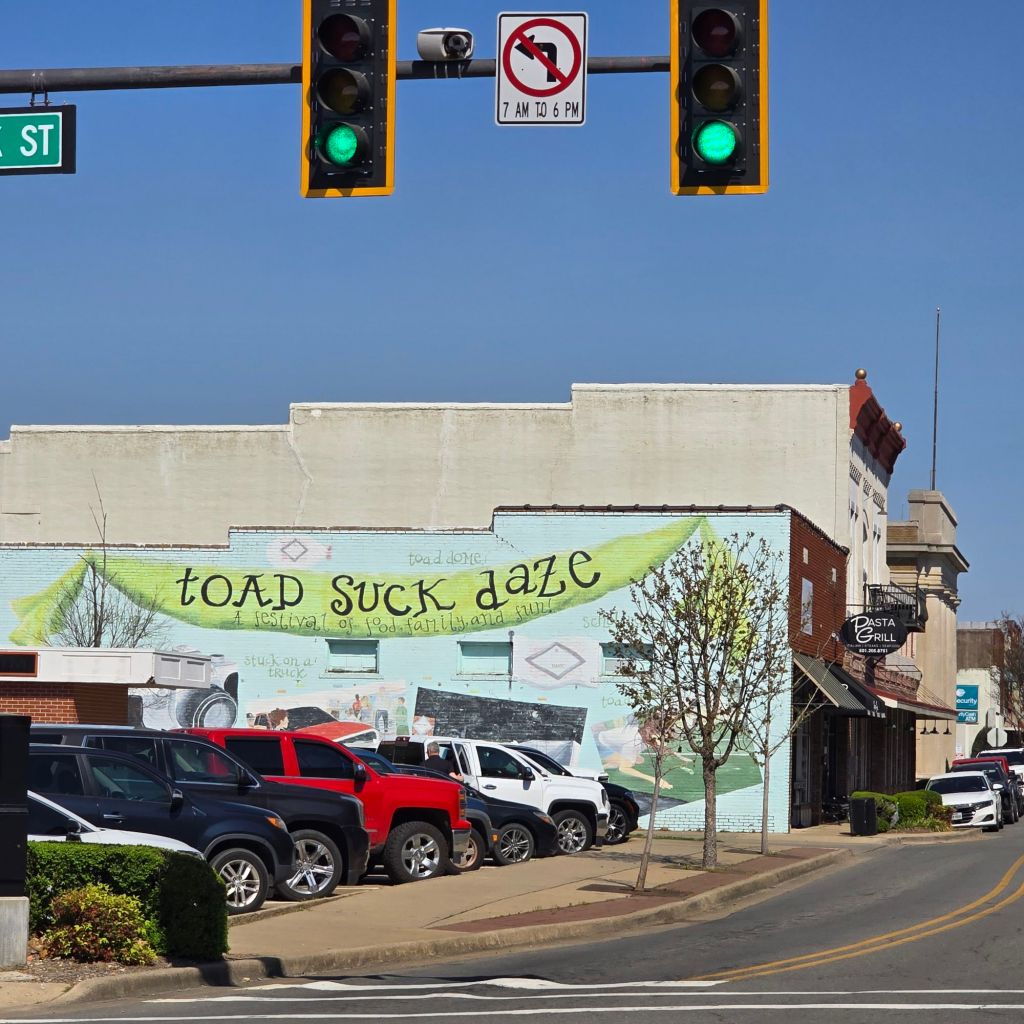
    We walked through old town Conway and happened onto the Toad Suck Square. Another local asked if we were visitors and then proceeded to explain the Toad Suck festival and it’s history. Toad Suck is actually a town on the river near Conway. Turns out, a section of river that gets narrow and shallow is referred to as a suck and such an area was just down river from Conway where the ferry used to run. This area began having an annual festival which became known as the Toad Suck Festivial.. In 1990, because of flooding at the original location, the festival was moved to Conway where it has remained. It is a huge event which draws many vendors and fills the old town area for the week. If you are near Conway in early May, check it out.

    We decided to see if our other Lachowsky relatives were in the Lachowsky section at St Joseph cemetery and we texted my first cousin once removed and self-made family geneologist,, Debbie Brigante (daughter of my cousin, Betty Brigante) to confirm our relatives identities. Thanks to Debbie, we found the location of my great grandparents, Edward and Catharine Lachowsky (David Anthony’s grandparents). Very near to them are several unmarked plots. One that I keep getting drawn to is a stone cross that has long ago lost the wood or metal name plate that identified the individual. Could this be David’s plot? Or perhaps he could have been buried with his maternal grandparents, Paul and Magdelena Loetscher. Again Debbie informed us that the Loetschers were buried in a public cemetery, Oak Grove cemetery. It was a half mile from St Joseph so we headed over there to see if we could find a Loetscher section. After a lengthy search, we finally discovered the very small headstones for both Paul and Magdelena side by side. They were the only Loetschers we found. Curiously, right next to them is the buried remnant of a third headstone broken off at ground level. Could this be David, or perhaps his aunt Antoinette Loetscher who died in childhood? Interestingly, Antoinette’s death certificate specifies her burial in Conway at St Joseph Cemetery but David’s death certificate only states burial in Conway without a specific cemetery identified. We’ll likely never know for sure. Debbie then informed us that, after Paul was murdered, the Loetscher family left Conway and moved to Colorado Springs. This is likely why there are no other Loetschers in Oak Grove.

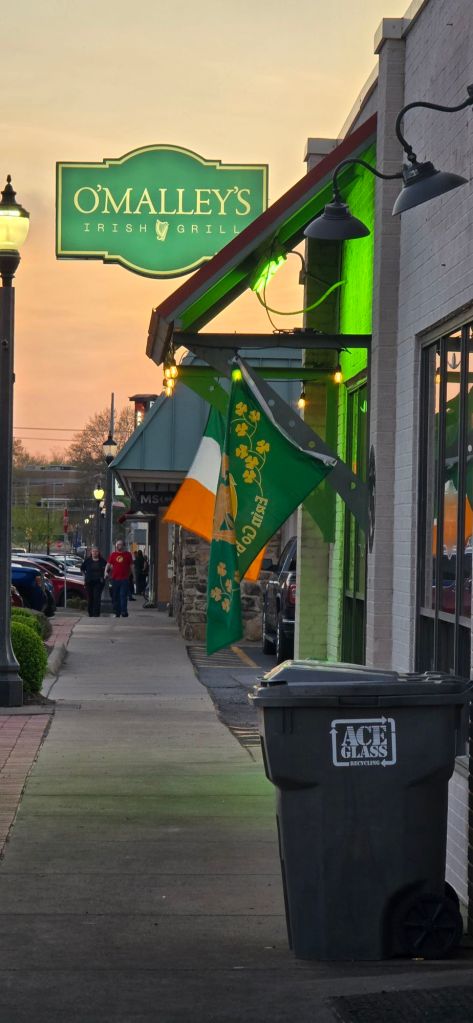
    We finished the day with a dinner at the O’Malley Irish Pub in Old Town COnway.

  • After a good night sleep in Knoxville we suffered our first casualty – I somehow lost my fitbit. I’m pretty sure it was on my wrist when we went to sleep, but on waking it was nowhere to be found. We searched the entire room and all our bags – no fitbit.

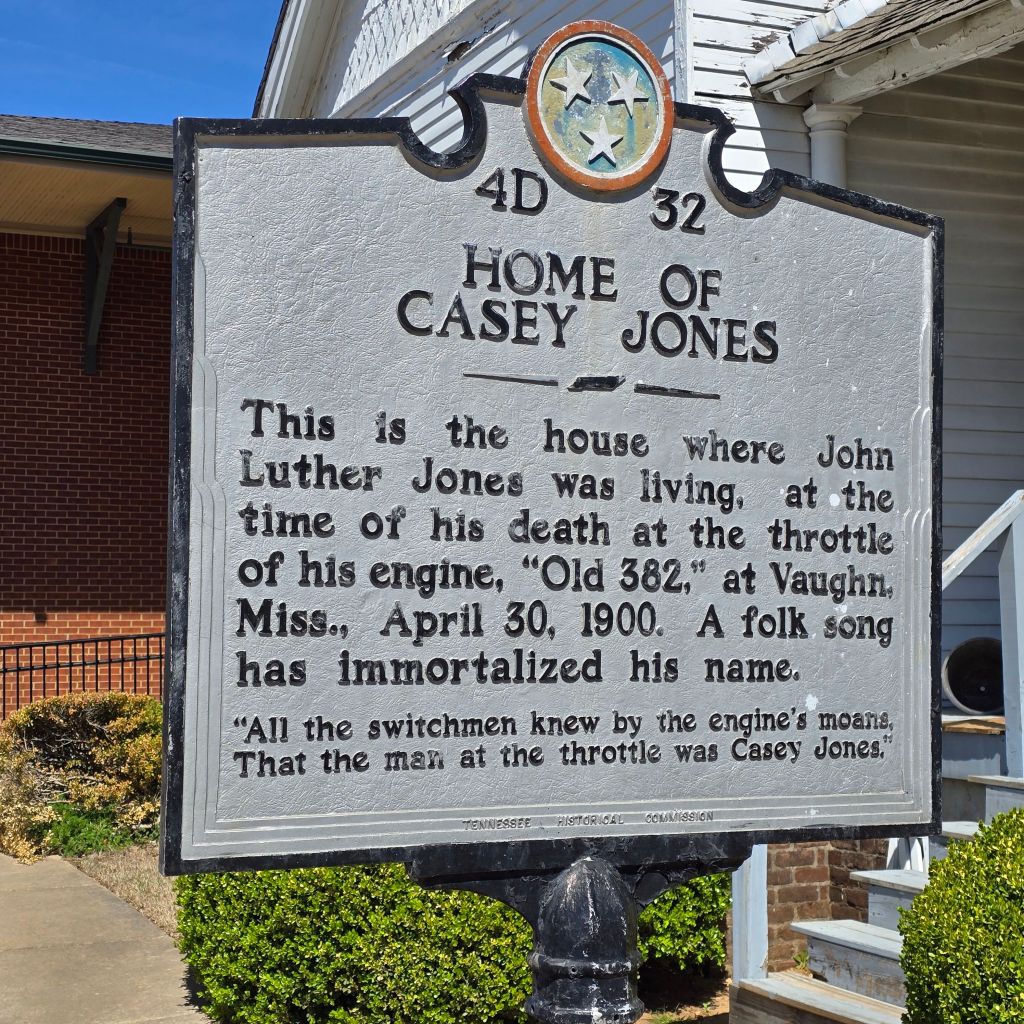
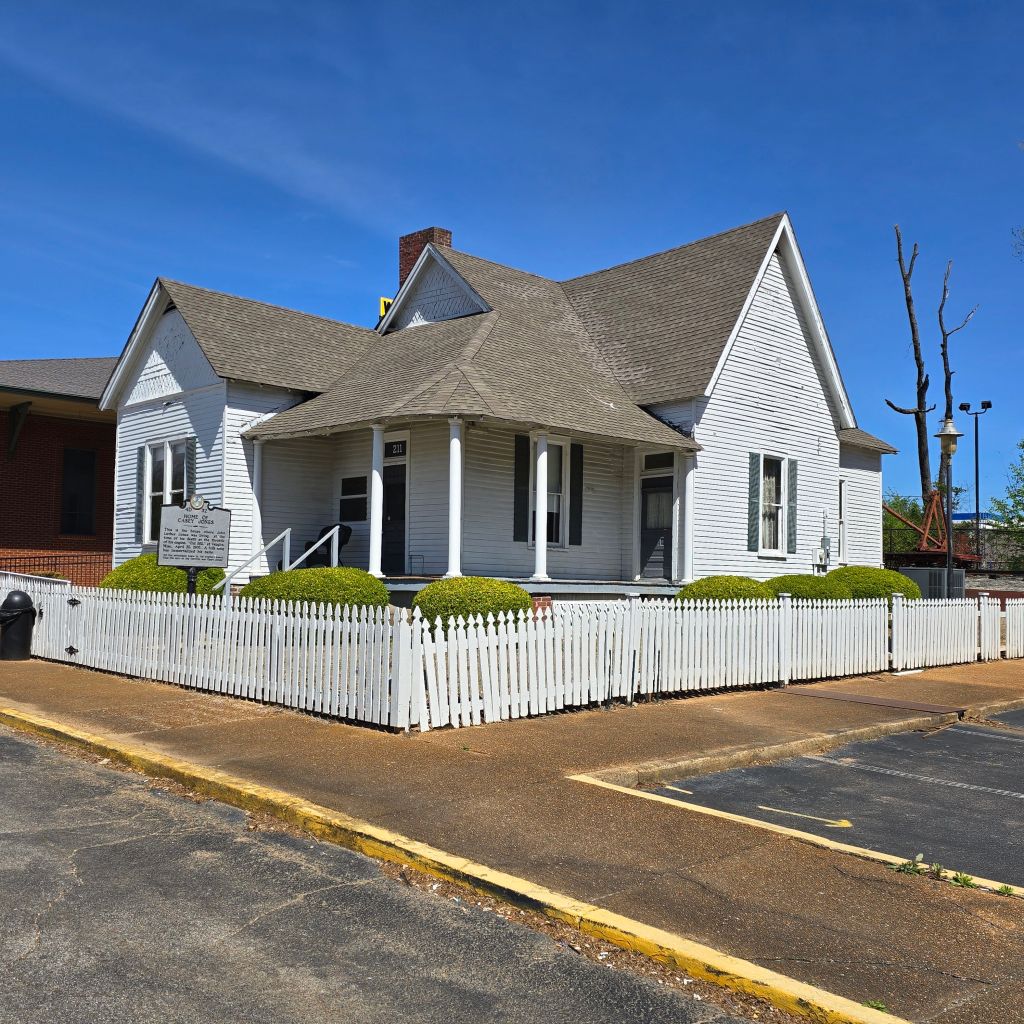
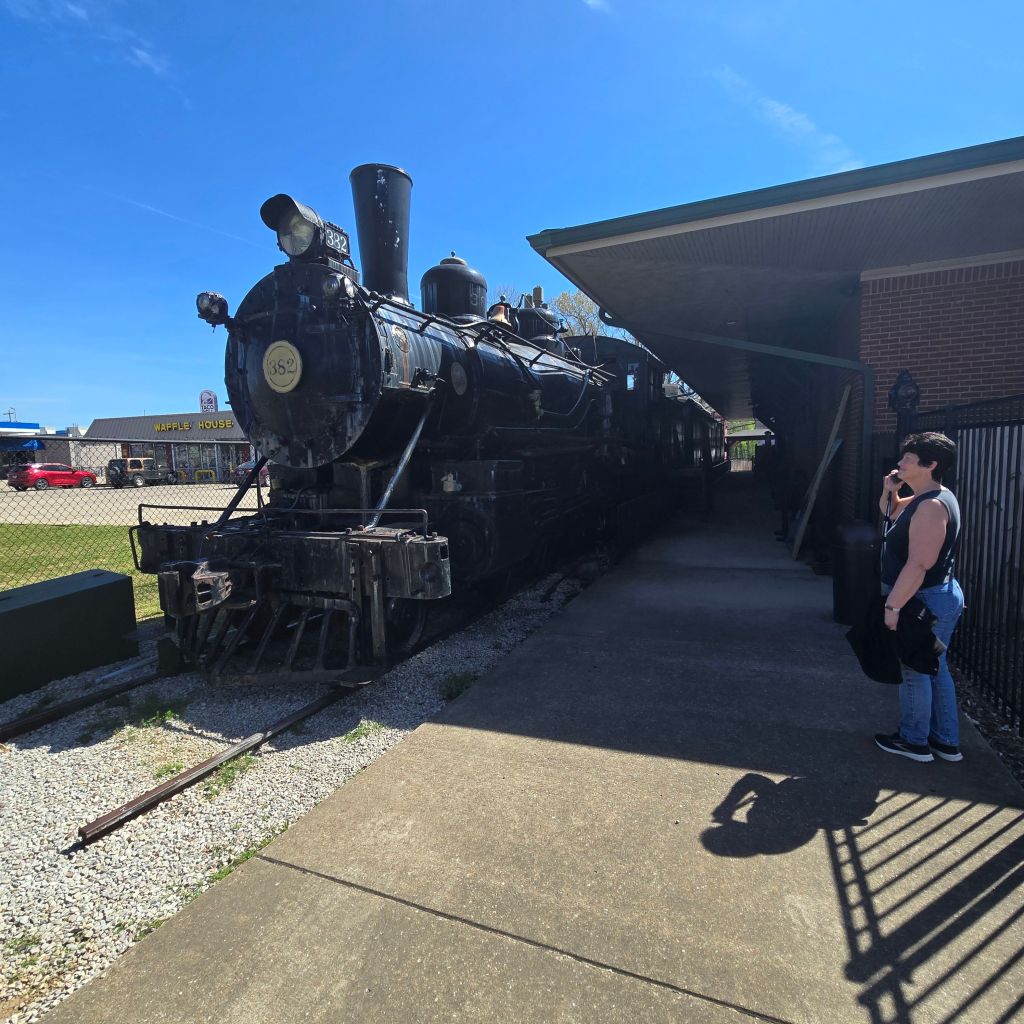
    We hit the road, and after some traffic leaving Knoxville., we had smooth sailing across Tennessee. Our first stop was in Jackson, the home town of the famous train engineer, Casey Jones. We stopped at the Casey Jones Museum and home to understand this real character that has been immortalized in the Disney Casey Jones Railroad ride. It was a fascinating stop. Casey Jones was famous for his ability to always keep his train on time and prided himself on this ability. Born John Luther Jones, his family moved to Cayce, Kentucky. When he joined the railroad, they asked him two questions: his name and where he was from. He responded John Luther Jones from Cayce, Kentucky. His new boss responded “welcome to the railroad, Cayce Jones”! The nickname stuck and eventually transformed to the Irish spelling, Casey. On April 29th, 1900, Casey took over for a sick engineer and took out the Engine 382, Known as the Cannonball to run a passenger train to Mississippi. Running fast to make up lost time, he came around a blind curve and spotted a disabled freight train blocking the track directly ahead. Casey yelled for his fireman to jump but Casey stayed in his position, reversed engine, pulled the brake and pulled the whistle cord. The train slowed rapidly but plowed through the last three freight cars, derailed, and rolled off the track. Although the train was filled with passengers, there was only one casualty – Casey gave his life to save all those passengers on the train. His lifeless body was found with his left hand on the brake and right hand on the whistle.

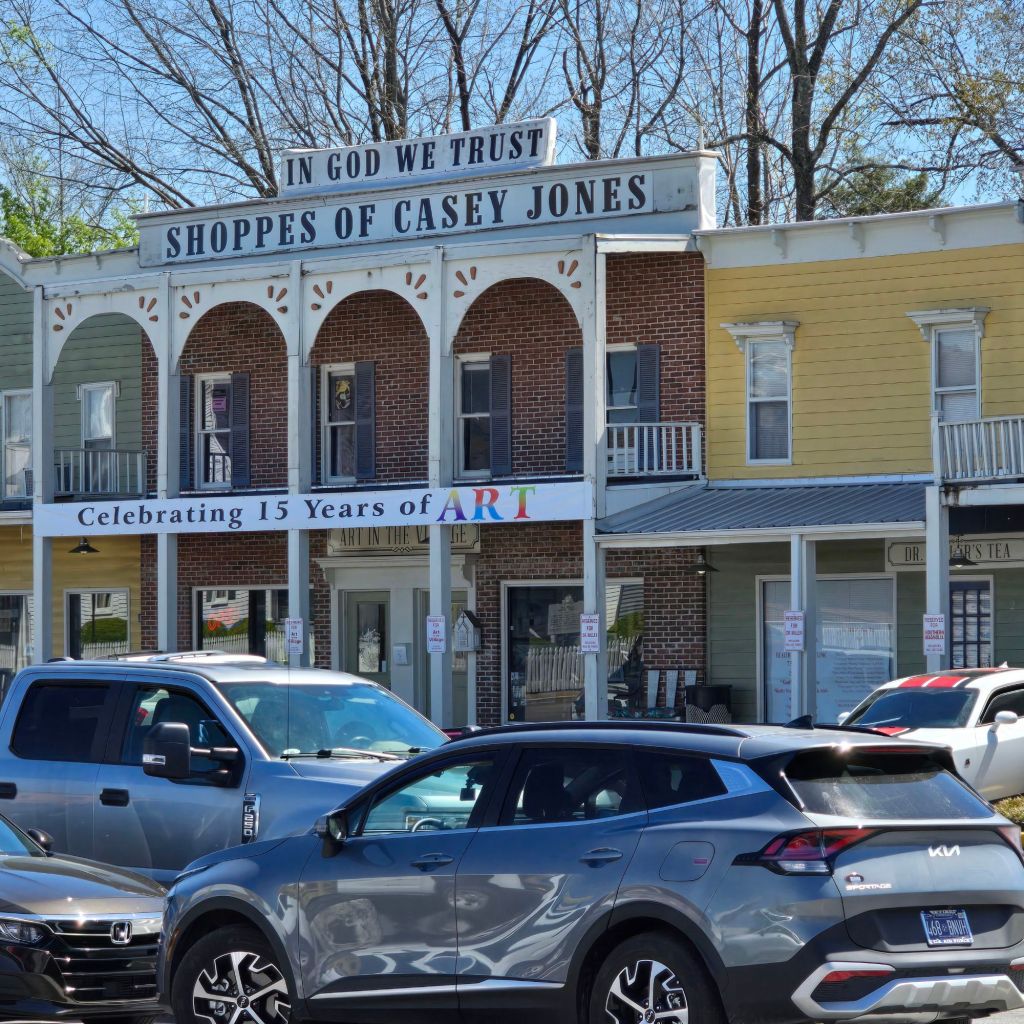
    There was also a cute little village where we had lunch. A play area had a little play train engine and a Tennessee steel band play wall.

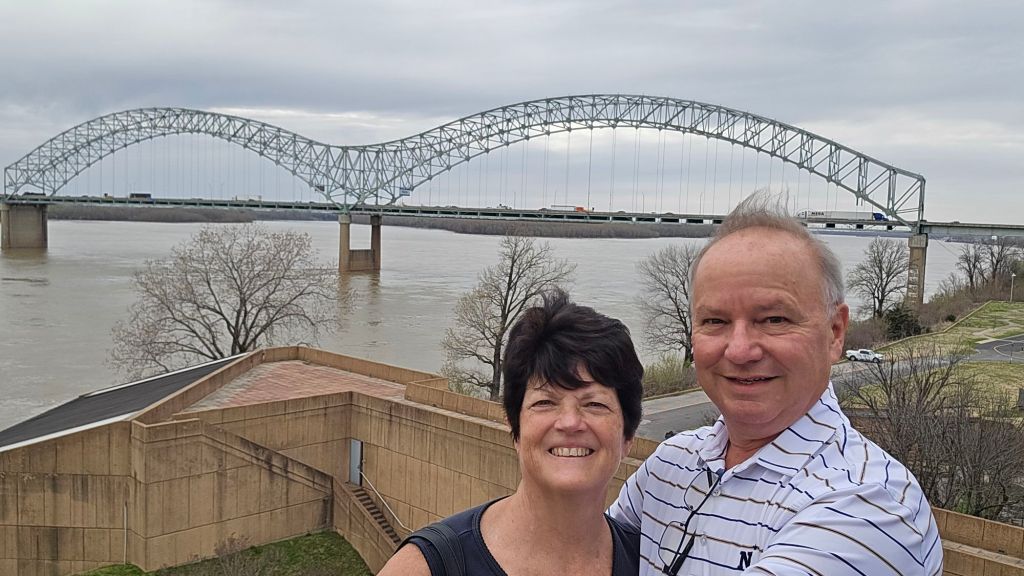
    We stopped a second time at the Mississippi River. This massive river is always a sight to see and we took a walk out the raised footbridge in Memphis to get a good view of the river expanse.

    Our day ended when we arrived in Conway, Arkansas. This is the childhood home of David’s mother, Kay Portner. David was named after his uncle and Kay’s older brother, David Anthony Lachowsky. David Lachowsky died from measles at the age of 2 years old, three years before Kay Portner was born. His death certificate indicated he was buried in Conway, but his burial site is unknown. We hope to visit the cemetery at St Joseph’s Church, which was the only Catholic cemetery in Conway at that time, to see if we can find David Lachowsky’s final resting place.

  • Prolog – this is the first attempt at a blog and we are going to fumble through the first few days I’m sure. That said, we will attempt to capture the essence of our travels and hopefully make it fun to read.

    We left our home in Nags Head at about 9:30am, having packed our minivan with everything we could think we would need for this multi-week adventure. It was a sunny but cool morning and we had our coffee to give us a warm start.

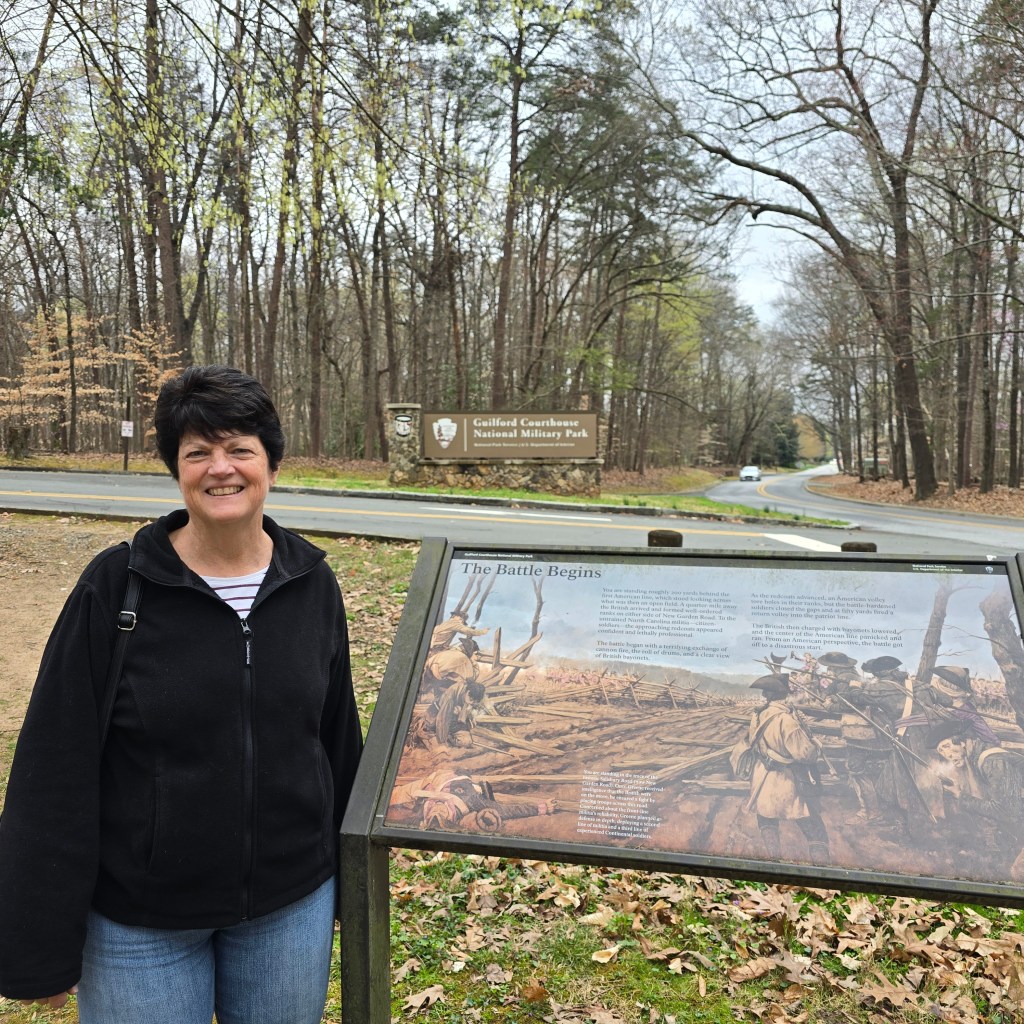
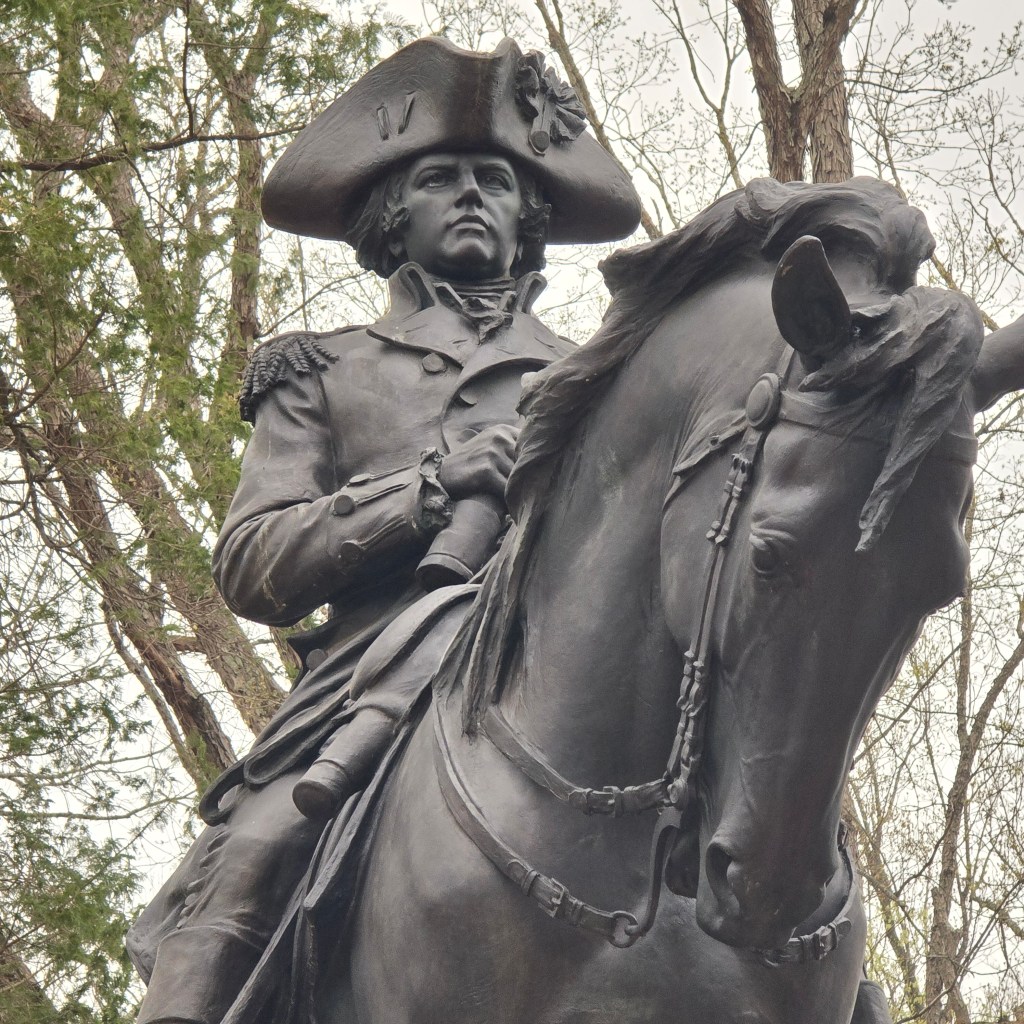
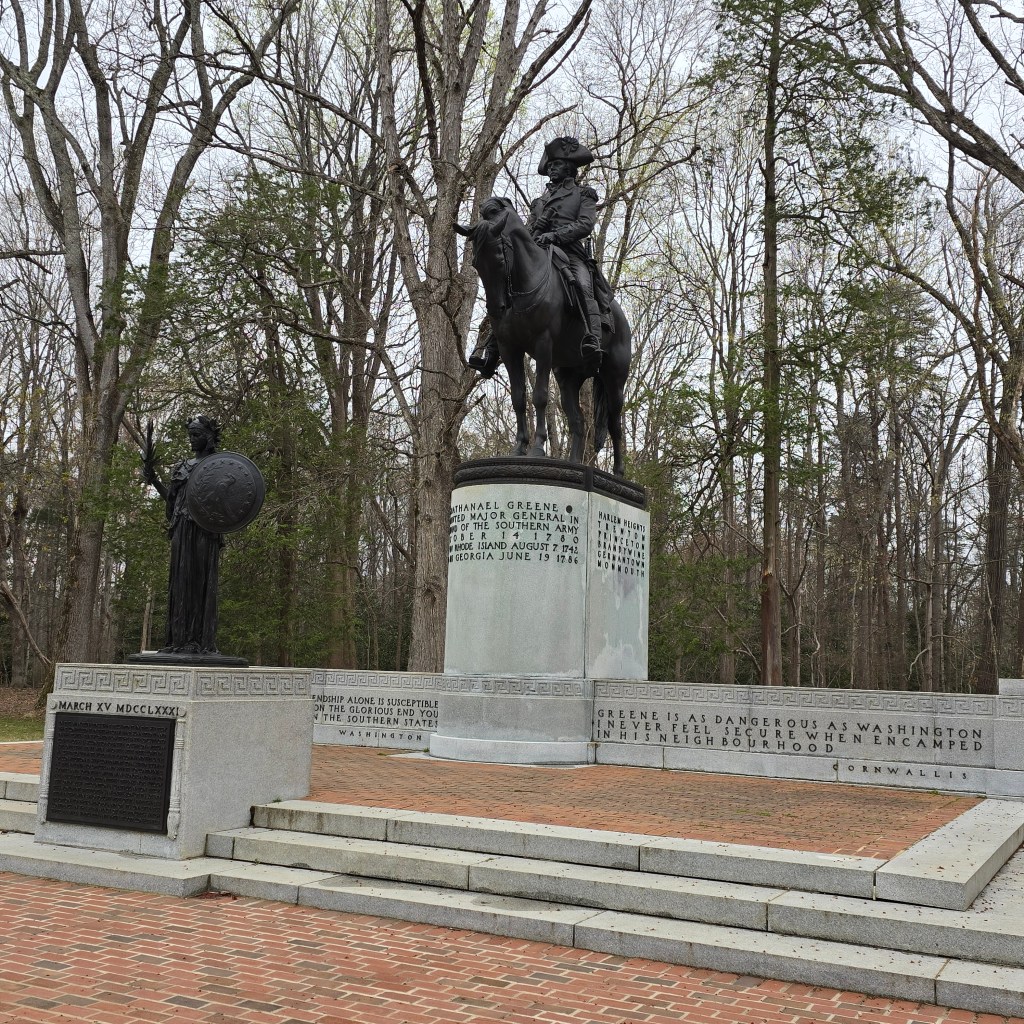
    North Carolina is a looong state. We spent most of the first day crossing from east to west. We stopped in Greensboro for a picnic lunch and chose to visit the Guilford Courthouse National Battlefield Memorial. What an interesting stop! This is the location from the Revolutionary War where the colonial force of 4500 militia including some regulars under Major General Nathaniel Greene engaged the British Army force of 2100 under General Cornwallis in 1881 along the Great Salisbury Road (now New Garden Road). Cornwallis believed if he could secure control of the Carolinas he would be able to get the Colonials to submit and end the war. Nathaniel Greene aligned his men in three successive fronts along the road with the militia in the first and second line and the regulars in the third. This tactic proved fatal for the British troops and they lost 25% of their men. However, when additional British troops arrived on the scene, Nathaniel Greene prudently withdrew, resulting in a nominal victory for the British. However this battle and the high losses caused Cornwallis to decide to move his operations north into Virginia which resulted in his becoming trapped at Yorktown and forced to surrender to Washington.

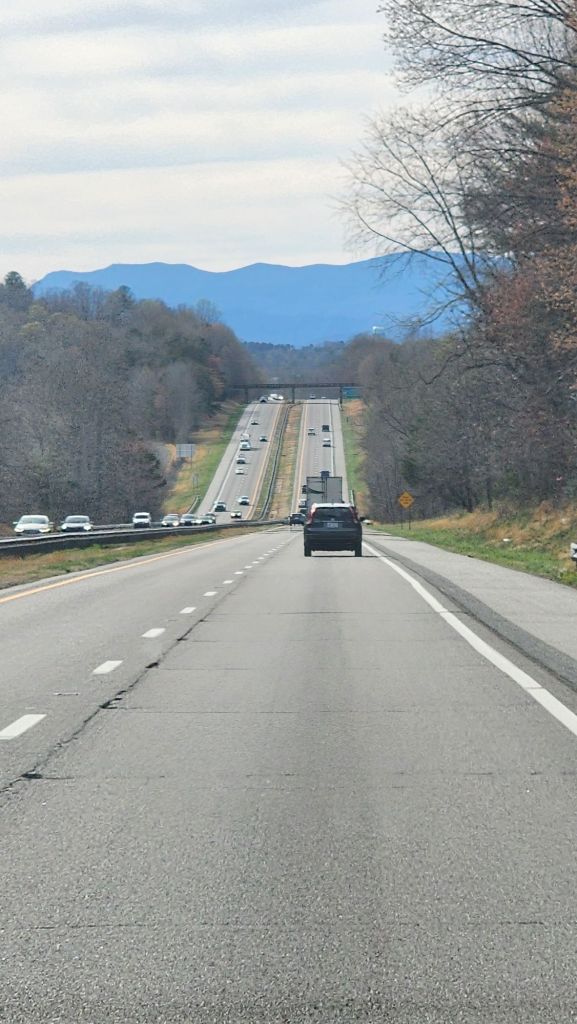
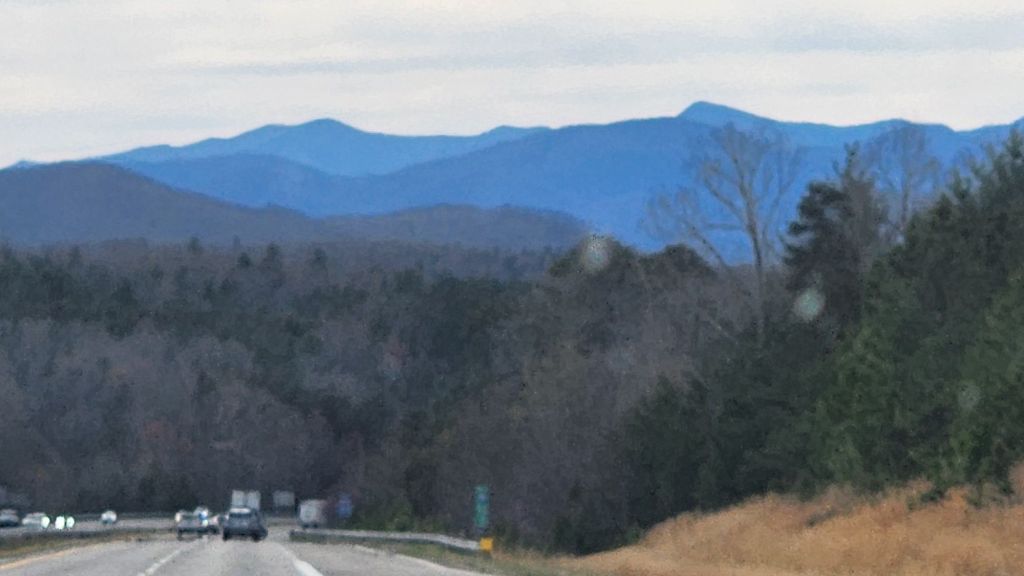
    After our lunch and walk through the battlefield we returned to the road. Our trip continued west on I-40 through Ashville and the devastation from Hurricane Helene was still visible in places. I-40 was completely washed out in places by the Hurricane west of Ashville along the Pigeon River and only recently reopened in January with one lane each direction. It was an interesting drive. We crossed the Smoky Mountains into Tennessee and finished the day in Knoxville.